
Pricing Guide
How Much Does Pool Cage Rescreening Cost in Florida? (2026 Pricing Guide)

Most Florida homeowners spend $1,500 to $4,500 to fully rescreen a pool cage in 2026, with the average single-story enclosure landing right around $2,400. But that's just the headline number — the real cost depends on cage size, mesh type, frame condition, and how many panels actually need replacing. This guide breaks down exactly what you'll pay across South Florida, what drives the price up or down, and how to make sure your quote is fair.
In This Guide
Average Pool Cage Rescreening Cost in Florida
Across Central and South Florida in 2026, here's what homeowners are actually paying for full pool cage rescreens:
| Cage Size | Typical Cost Range | Average |
|---|---|---|
| Small (under 600 sq ft) | $1,200 – $2,000 | $1,650 |
| Medium (600–1,200 sq ft) | $1,800 – $2,900 | $2,400 |
| Large (1,200–2,000 sq ft) | $2,800 – $4,200 | $3,500 |
| Oversized (2,000+ sq ft) | $4,000 – $6,500+ | $5,200 |
These numbers assume standard 18×14 charcoal fiberglass mesh, no significant frame repairs, and one screen door rescreen included. Specialty mesh (hurricane-rated, no-see-um, pet-resistant) and frame work add to the bottom line, which we'll break down below.
Quick reality check: If a quote comes in significantly under $1,200 for a full cage in Florida, you're either looking at a partial patch job, low-grade mesh, or an unlicensed contractor. Real workmanship costs real money — but you shouldn't be overpaying either.
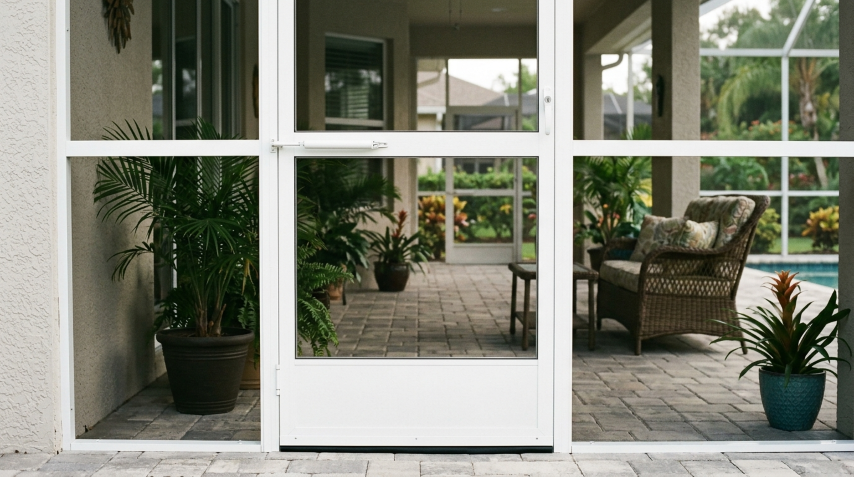
What drives the Price Up or Down
Five things shape every pool cage rescreening quote you'll get in Florida:
1. Cage Size and Panel Count
Bigger cage, more mesh, more labor. Most contractors quote based on either total square footage or total panel count. A standard 800 sq ft cage might have 18–24 panels; a 1,500 sq ft cage can run 35–50 panels. Each additional panel adds material and tensioning time.
2. Mesh Type
The single biggest cost lever. Standard charcoal fiberglass is the cheapest. Hurricane-rated mesh costs roughly 2–3x more per square foot. We break it all down in the mesh types section below.
3. Full Rescreen vs. Partial Replacement
If only a handful of panels are torn, a partial rescreen can save 40–60% versus doing the whole cage. The catch: if the rest of the mesh is more than 8–10 years old, you may end up rescreening the cage anyway within a year or two as the older panels start failing too.
4. Frame Condition
Aluminum cage frames last decades, but rust spots, loose screws, missing super gutters, or bent uprights add labor. Most reputable contractors include minor frame work in the base price. Major repairs — replacing structural beams, repainting the frame, super-gutter replacement — are quoted separately.
5. Screen Doors and Hardware
A typical pool cage has 1–2 screen doors. Each door rescreen runs $90–$160. New door sweeps, kickplates, and closers add $20–$60 per part. Cheap closers fail in Florida humidity within 12–18 months — spend the extra and get the heavy-duty ones.
Want a real number for your cage?
Free, on-site estimates within 24 hours. No high-pressure sales.
Mesh Types and Cost Differences
Florida pool cages typically use one of four mesh types. Each one has a real impact on cost, durability, and how the cage performs in the conditions outside your front door:
| Mesh Type | Best For | Cost Multiplier | Lifespan |
|---|---|---|---|
| Standard 18×14 Charcoal | Most homes, everyday use | 1x (baseline) | 8–12 years |
| Pet-Resistant | Dogs, cats, raccoons | 1.6–2x | 10–15 years |
| No-See-Um 20×20 | Coastal, waterfront, marshy | 1.4–1.7x | 8–10 years |
| Hurricane-Rated | Storm-prone zones | 2–3x | 15+ years |
For most Boca Raton, Fort Lauderdale, and West Palm Beach homes, standard 18×14 charcoal is the default and still does the job. If you're directly waterfront, on the Intracoastal, or in a high-storm exposure area, the upgrade to hurricane-rated or no-see-um mesh is worth it. See our full mesh options breakdown.
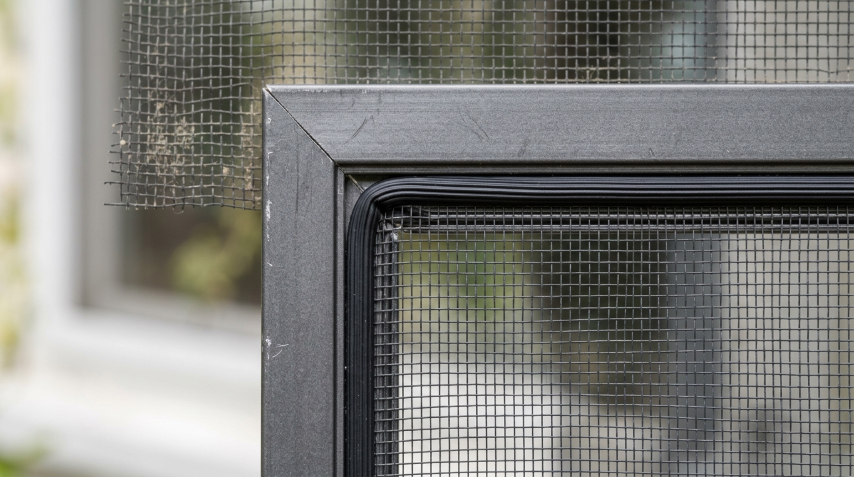
Cost Per Panel vs. Full Rescreen
If only a handful of panels are damaged, you don't need to rescreen the entire cage. Here's roughly what to expect for partial work:
- Single panel replacement: $65–$140 per panel (standard mesh)
- Multi-panel patch (3–6 panels): $55–$110 per panel
- Hurricane mesh single panel: $130–$220 per panel
- Screen door rescreen: $90–$160 per door
The break-even point usually lands around 8–10 panels. Once you're replacing more than that, the per-panel rate of a full rescreen becomes cheaper than paying setup time per individual panel. A reputable contractor will tell you straight up which makes more sense for your cage.
DIY vs. Hiring a Pro
It's possible to rescreen a single panel yourself. A roll of standard mesh runs $40–$80, a spline roller is about $15, and replacement spline is a few dollars per panel. For a small ground-floor patio with one or two torn panels, plenty of homeowners handle it on a Saturday.
Where DIY breaks down:
- Tensioning at scale. Getting consistent tension across 20+ panels so the cage doesn't end up wavy or saggy is a learned skill.
- Two-story cage tops. The roof of a typical pool cage is 14–20 feet up. You're working off ladders, scaffolding, or the cage frame itself. Falls happen.
- Hurricane-rated install. The mesh requires specific spline sizes, tools, and panel preparation to actually meet the rating.
- Time. A full cage rescreen takes a pro 2–3 days. A homeowner doing it for the first time, alone, on weekends — that's typically 4–6 weekends.
Rough math: DIY materials for a medium cage run $400–$700. Pro labor for the same job runs $1,400–$2,200 on top of that material. You're paying for speed, tensioning consistency, frame inspection, hauling old debris, and the warranty.
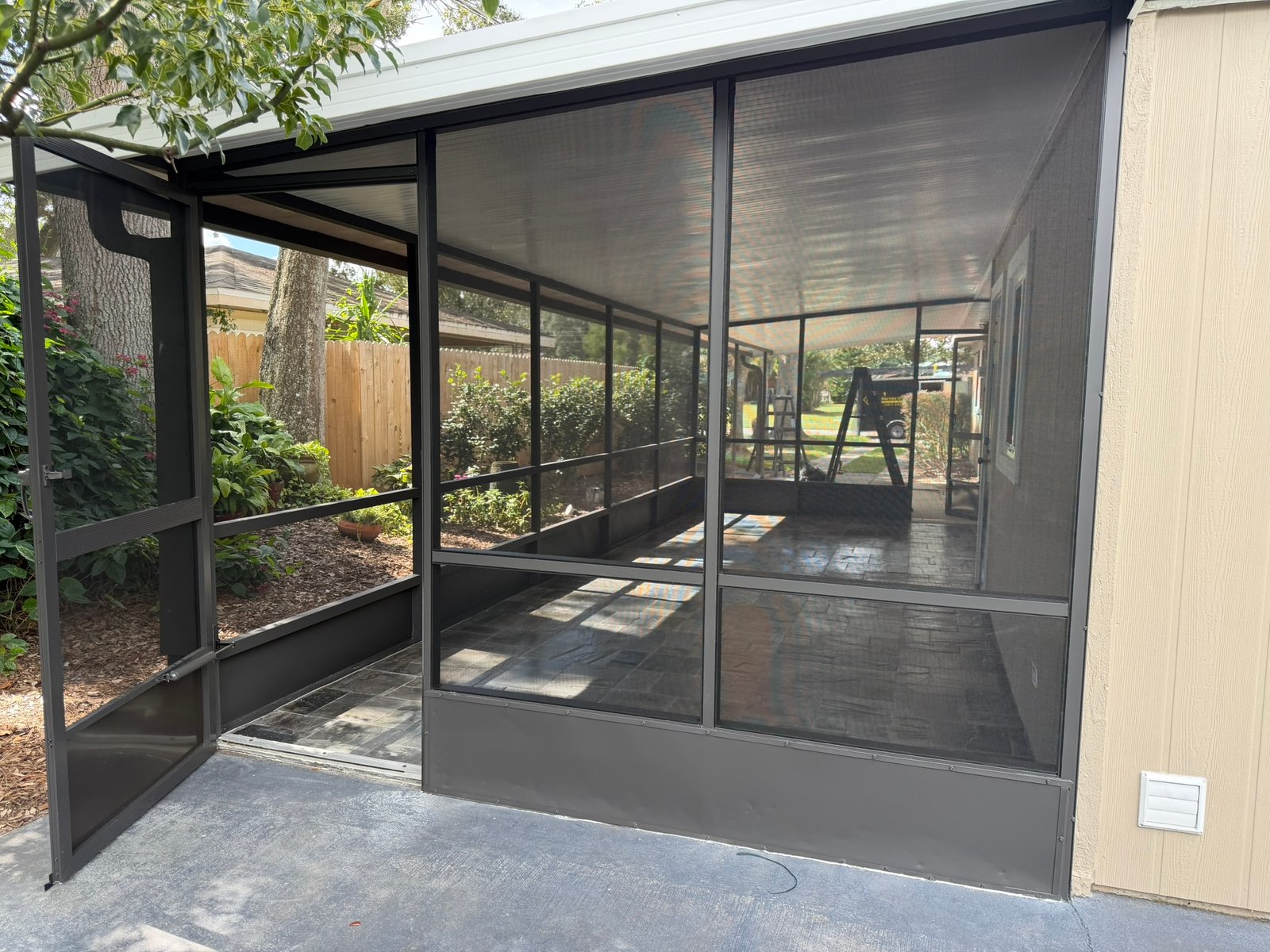
How to Get an Accurate Quote
Three steps to get quotes you can actually compare side by side:
- Insist on on-site measurement. Anyone quoting blind off photos is guessing. Real numbers require eyes on the cage.
- Get the mesh type in writing. "Standard mesh" can mean different things to different shops. Confirm it's 18×14 fiberglass (or whatever specialty mesh you chose).
- Ask what's included. Frame inspection? Door sweep replacement? Debris haul-off? Cleanup? Warranty? These should all be listed in the written quote, not assumed.
If you're in our service area, we provide free on-site estimates within 24 hours and put everything in writing before any work starts. Request your free estimate here.
Red Flags to Watch For
Pool cage work is one of those trades where the bad players really stand out. Walk away if:
- The contractor isn't licensed and insured (always ask for proof — a real one shows it without hesitation)
- You're pressured to sign on the spot or pay a large deposit upfront ("today only" pricing is a red flag)
- The quote doesn't list materials, panel count, or scope
- They want to reuse old spline ("save you money") — brittle spline fails fast in the Florida sun
- No mention of cleaning up old screen and debris
- No workmanship warranty offered
A clean rescreen quote from a reputable Florida contractor will spell out mesh type, panel count or square footage, frame work, hardware replacement, and a written warranty. Anything less, get a second opinion.
Ready for a real quote?
Owner on every job. Same-week service. Most estimates within 24 hours.
Frequently Asked Questions
How much does it cost to rescreen a pool cage in Florida?
Most Florida homeowners pay between $1,500 and $4,500 for a full pool cage rescreen in 2026. The exact price depends on cage size, mesh type, panel count, and whether any frame repairs are needed. A medium-sized cage with standard mesh averages around $2,400.
Is it cheaper to rescreen or replace the whole pool cage?
Almost always rescreen. The aluminum frame on most Florida pool cages lasts 30+ years — it's the screen mesh that fails. A full cage replacement runs $8,000–$25,000, while a full rescreen rarely tops $5,000. Unless your frame is structurally damaged, rescreening is the right call.
How often should you rescreen a pool cage in Florida?
Standard 18×14 fiberglass mesh in Florida lasts 8–12 years before it starts to sag, fade, or develop holes. Coastal and waterfront homes see the lower end of that range due to salt-air exposure. Hurricane-rated mesh holds up 15+ years.
Does insurance cover pool cage rescreening?
For routine wear and tear, no — that's homeowner maintenance. But if your cage was damaged by a named storm, hail, or fallen tree, your homeowner's policy often covers rescreening (subject to deductible). Document the damage with photos before any cleanup.
Can I rescreen just the damaged panels?
Yes — partial rescreens are common and can save 40–60% versus a full cage. But if the rest of your mesh is 8+ years old, you may end up rescreening the whole cage within a year or two anyway as other panels fail. A good contractor will give you straight advice on which makes sense.
How long does a pool cage rescreen take?
Most full pool cage rescreens take 2–3 working days. Single-panel repairs are usually completed in a single visit. Larger or storm-damaged cages can take 4–5 days. Weather (especially Florida summer afternoon storms) can push timelines.
What's the best mesh for a Florida pool cage?
For most homes, standard 18×14 charcoal fiberglass is the right balance of cost, visibility, and durability. Coastal and waterfront homes benefit from no-see-um mesh. Storm-prone zones should consider hurricane-rated mesh. See our full mesh comparison.
Ready for a real
rescreen quote?
Free, on-site estimates within 24 hours. Owner on every job. Clear pricing — no surprises.