
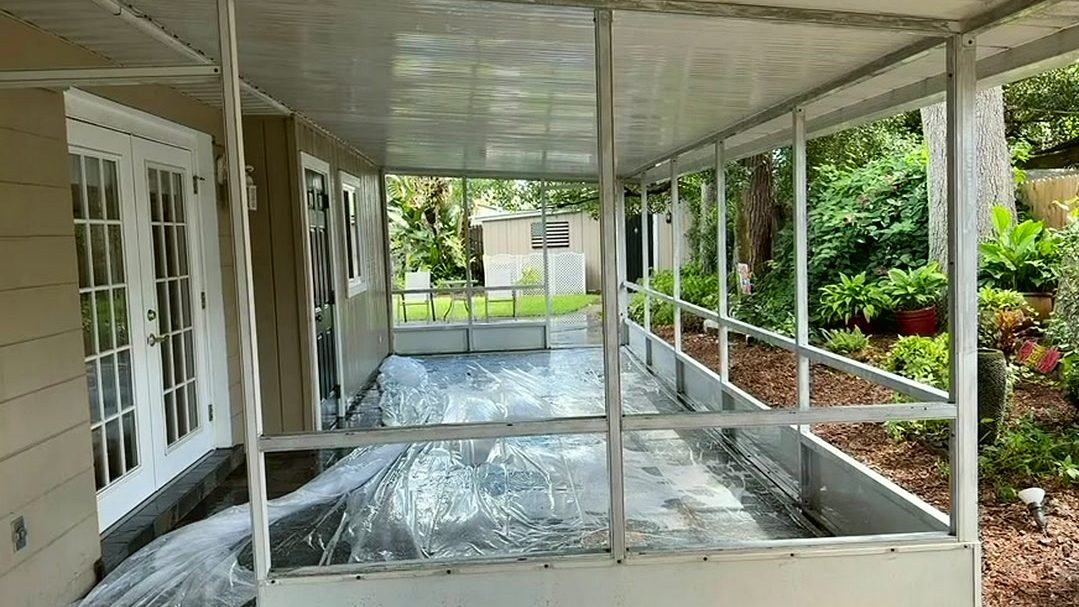
Pool cage oxidation in South Florida leaves bronze and white frames looking worn long before the aluminum itself is in trouble. Sun and salt air wear down the factory finish, and pool chemistry adds to the damage. The finish turns chalky and discolored and leaves the metal without protection. A proper repaint restores it.
What Oxidation Is
Aluminum does not rust. It oxidizes. A pool cage leaves the factory with a baked-on finish that keeps the weather off the metal. Years of strong sun break that finish down, salt air works on it, and pool chemistry adds to the load. Once the finish wears through, the aluminum surface itself reacts with the air and turns dull and powdery.
That powder is what people mean when they call a frame chalky. The frame is still structurally sound. On most pool cages the aluminum lasts decades. What has failed is the protective coating, and that can be restored.
Oxidation vs. Rust
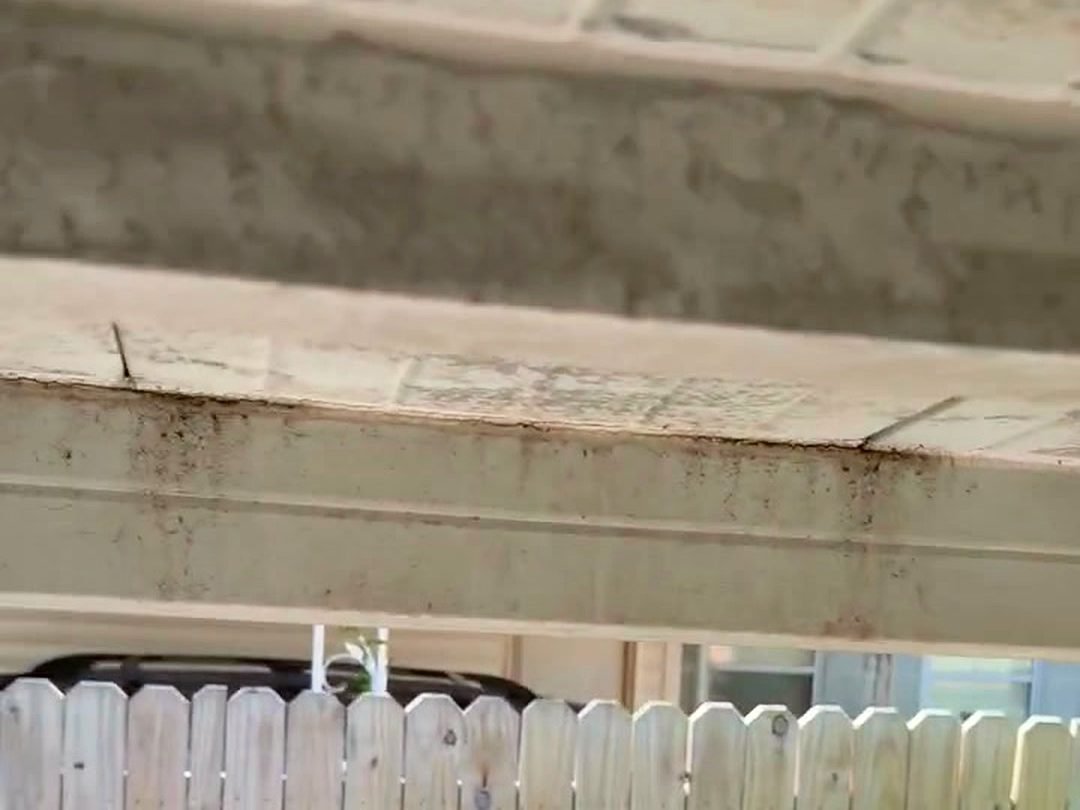
Both leave discoloration on an old cage, so they're easy to confuse. The difference is where they start: oxidation on the aluminum, rust at the steel fasteners.
| Oxidation | Rust | |
|---|---|---|
| Where | The aluminum frame members | Steel screws and fasteners |
| What it looks like | Chalky, faded, uneven color; powder on your hand | Orange or brown streaks running down from a screw head |
| What we do | Wash, prep, bonding primer and two finish coats | Rust treatment at the fasteners as part of the repaint |
Signs Your Frame Is Oxidizing
- Chalk on your hand. Run your palm along a frame member in a sunny spot. A powdery residue means the finish is breaking down.
- Faded or blotchy color. The sunny side of the cage looks lighter or patchier than the shaded side.
- Peeling or flaking. An earlier paint job lifting off the frame, often where the prep was rushed.
- A frame that never looks clean. Washing brightens it for a day, then the dull film returns.
- Rust streaks at the screws. A separate problem from oxidation, but it usually shows up on the same aging cage.
Any of these is a good reason to have the frame looked at. None of them means the cage has to be replaced.
Why It Speeds Up
As long as the factory finish is intact, it takes the weather for the metal. Once oxidation starts, that protection is gone in spots, and the bare areas take the full force of the sun, the salt and the pool water. The damage spreads faster from there. A frame that is only slightly chalky this year is a much bigger prep job a few years from now.
We recommend repainting at the first sign of chalking. Waiting for peeling means more scraping and sanding, and an earlier repaint leaves a smoother finish.
How a Repaint Stops It
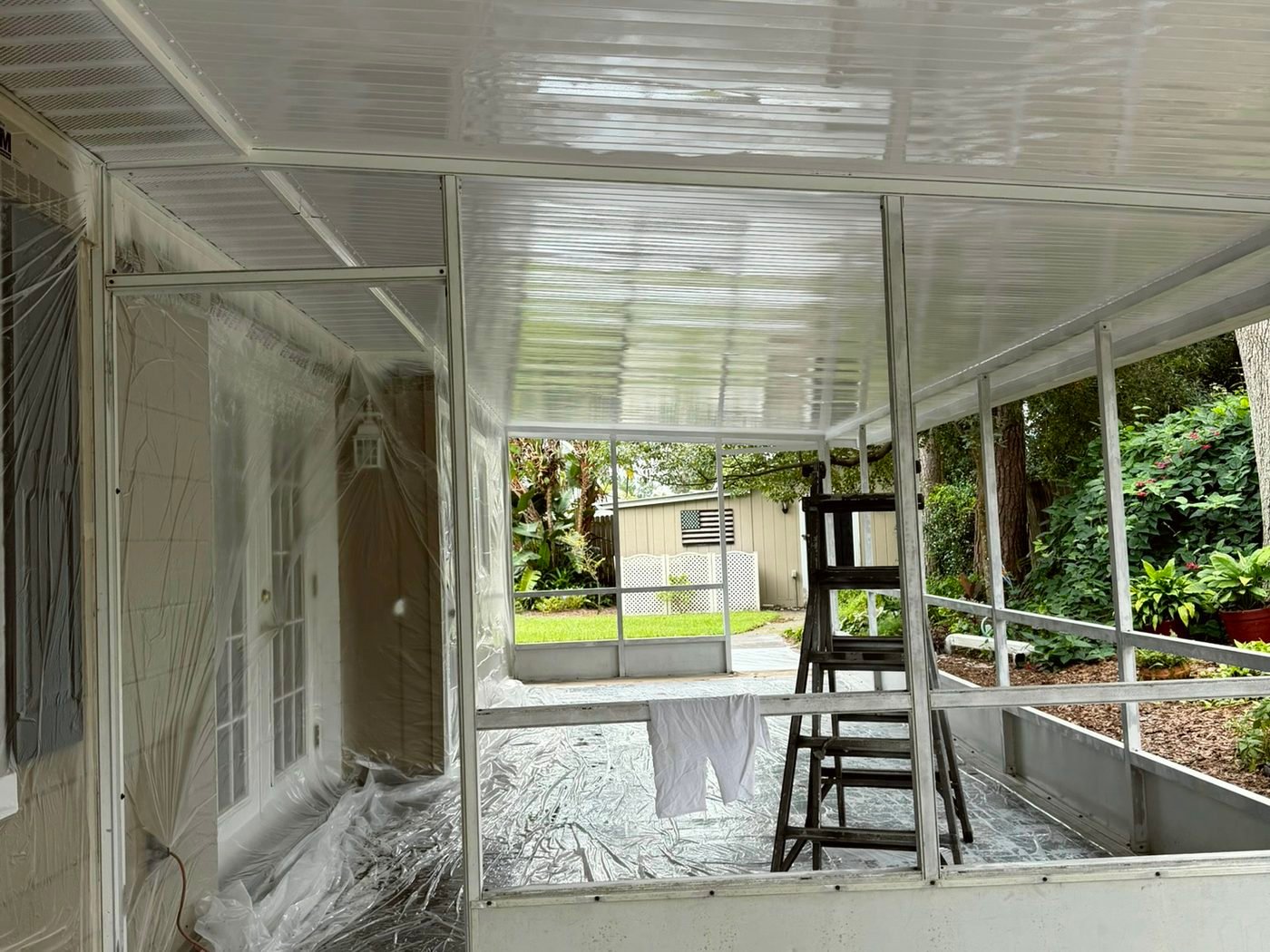
Paint on its own does not fix oxidation. A new coat laid over a chalky surface has nothing solid to grip. Every repaint follows these steps:
1. Pressure wash and full prep
We pressure wash the whole frame, hand-scrape any failing paint and spot-sand the rough areas. Screen panels and landscaping are masked off. This is the step most contractors rush, and it decides how long the finish lasts.
2. Rust treatment at the fasteners
Rusted screws and fasteners are treated before any coating goes on.
3. Aluminum-bonding primer
A full coat of Sherwin-Williams direct-to-metal bonding primer goes on every job before the topcoat. We don't skip it.
4. Two finish coats, sprayed
Two full coats go on with professional HVLP spray equipment, covering every corner, joint and underside, with no brush marks or roller texture.
5. Walk-through and warranty
We walk the finished cage with you and handle any touch-ups on the spot. You get a written workmanship warranty plus the manufacturer's warranty on the coatings.
Rescreening too? When the screens are out, every frame surface is open to prep and paint, including spots that are hard to reach with the mesh in place. If both are due, doing them together is the smartest time.
Coastal Homes
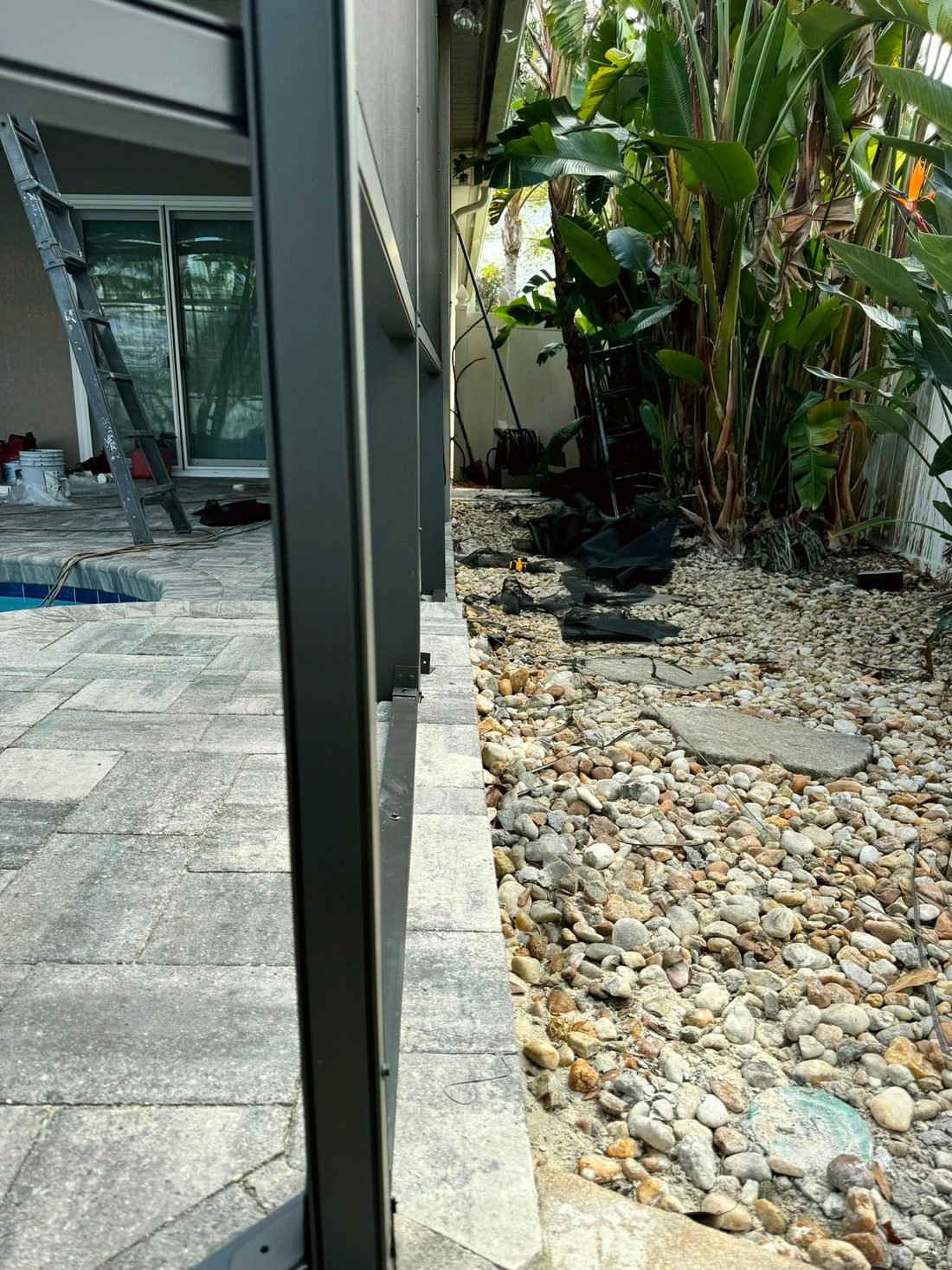
Salt air is hard on any finish, so we choose the coating by exposure. Most inland and typical South Florida cages get Sherwin-Williams SuperPaint Acrylic. Coastal properties get Direct-to-Metal Acrylic, which bonds directly to the aluminum and is rated for salt air. Homes with direct ocean frontage get Heavy Shield, an industrial-grade coating built for maximum exposure.
With proper prep and the right coating, 10 years or more is realistic for most South Florida homes. Cages right on the ocean tend to need repainting a little sooner. Our guide to the best paint for pool cages compares the three coatings, and the paint colors guide helps with the color choice.
Frequently Asked Questions
Is a chalky pool cage frame a structural problem?
Can I just paint over the oxidation?
How long does a pool cage repaint take?
Can I use the pool while the cage is being painted?
Can you match my HOA color?
Bring Your Frame Back to Life
Book a free paint estimate, usually within 24 hours. The owner is on every job, and you get an itemized written quote before any work starts.