
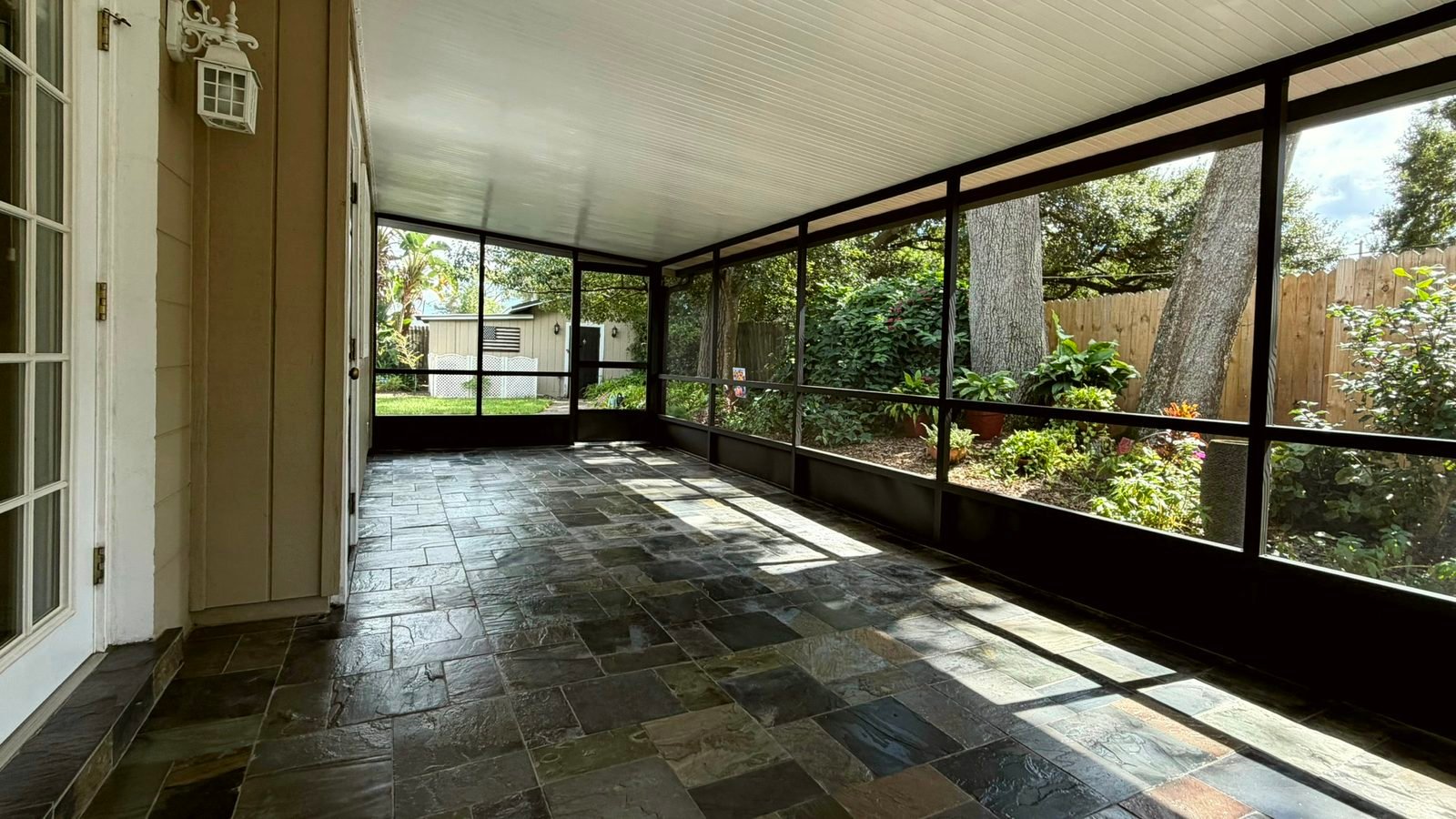
Pool cage paint colors in South Florida affect both the look of your house and the upkeep. White shows mildew and sprinkler stains first. Darker shades show chalk and dust.
The Colors Most Cages Wear
Most aluminum enclosures in Florida were built in one of two factory finishes: white or bronze. Repainting gives you more choices. These are the colors homeowners ask us for most, with the marks each tends to show as it ages:
| Color | The Look | Shows Most |
|---|---|---|
| Pure White | Crisp and bright | Mildew and rust stains |
| Ivory | A softer, warmer white | Mildew and dirt |
| Sand | Light and warm, easy next to beige walls | Dirt, less starkly than white |
| Bronze | Dark brown metallic, the other factory standard | Chalk and water spots |
| Charcoal | Dark gray with a modern feel | Dust and chalk |
| Black | The darkest, most modern option | Dust and chalk |
Custom colors are available too, including exact matches to an HOA's approved palette. Our pool cage painting service page lists the coatings we use.
White vs. Bronze
Most color decisions start with white and bronze. The differences show up in everyday use.
The view through the screen
Our standard 18×14 mesh is charcoal fiberglass, and a dark frame behind it tends to fade into the background, letting your eye go past the enclosure to the yard or water. A white frame is easy to see. Some homeowners prefer that, because it outlines the enclosure and brightens a shady lot.
Keeping it clean
White shows mildew and dirt quickly. If your sprinklers run on well water, the orange stains are hard to miss against a white frame. Bronze hides most of that, but it shows chalking, the pale haze a coating develops as it weathers.
Heat
Dark colors absorb more sun, so bronze and black frames get hotter to the touch. You'll notice it on door handles and the rails people grab. Most of the shade under the cage comes from the mesh, which covers far more of the roof than the frame does.
Style
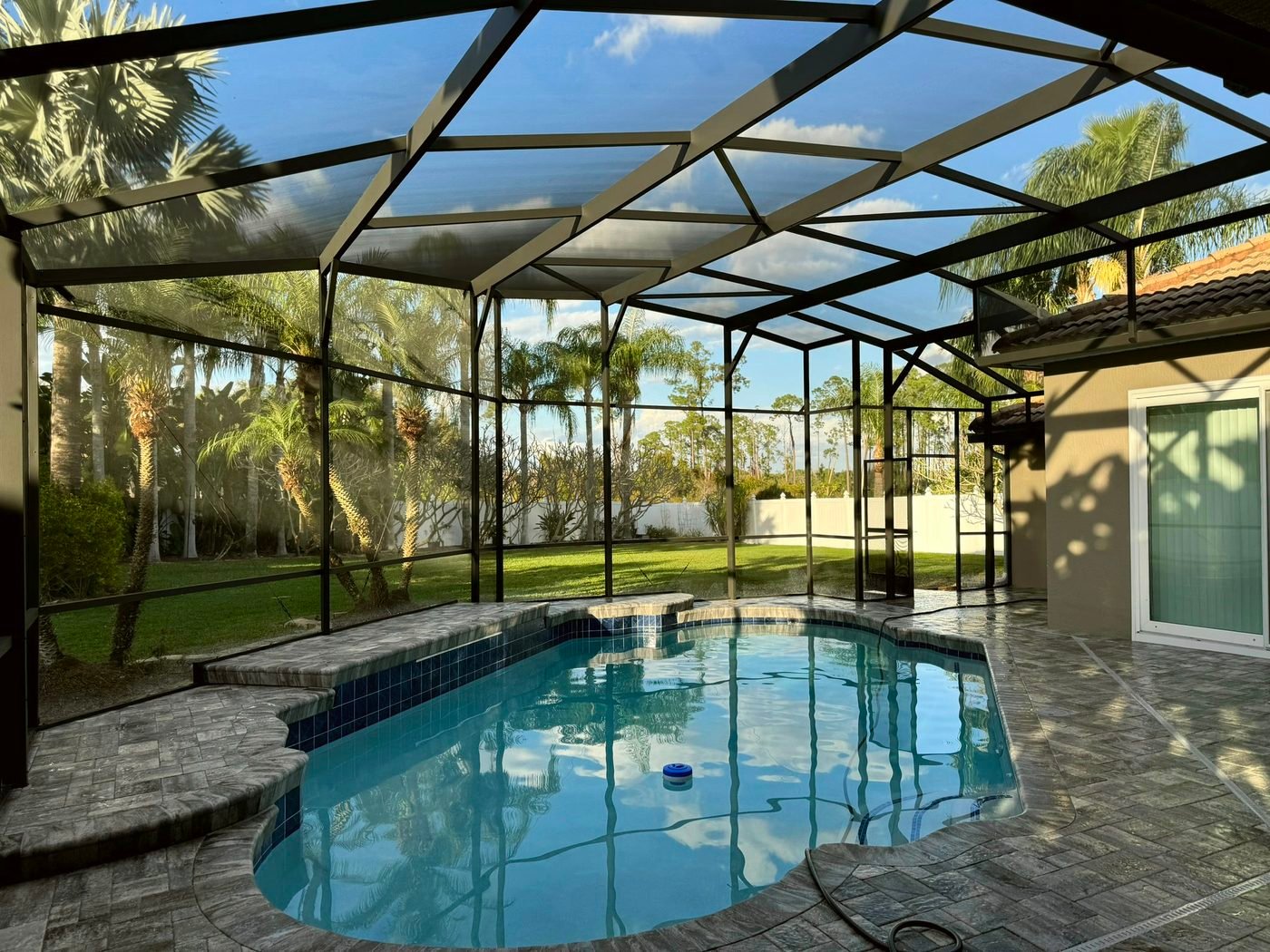
White suits houses with white trim and a light, coastal look. Bronze works well with tile roofs and bronze window frames.
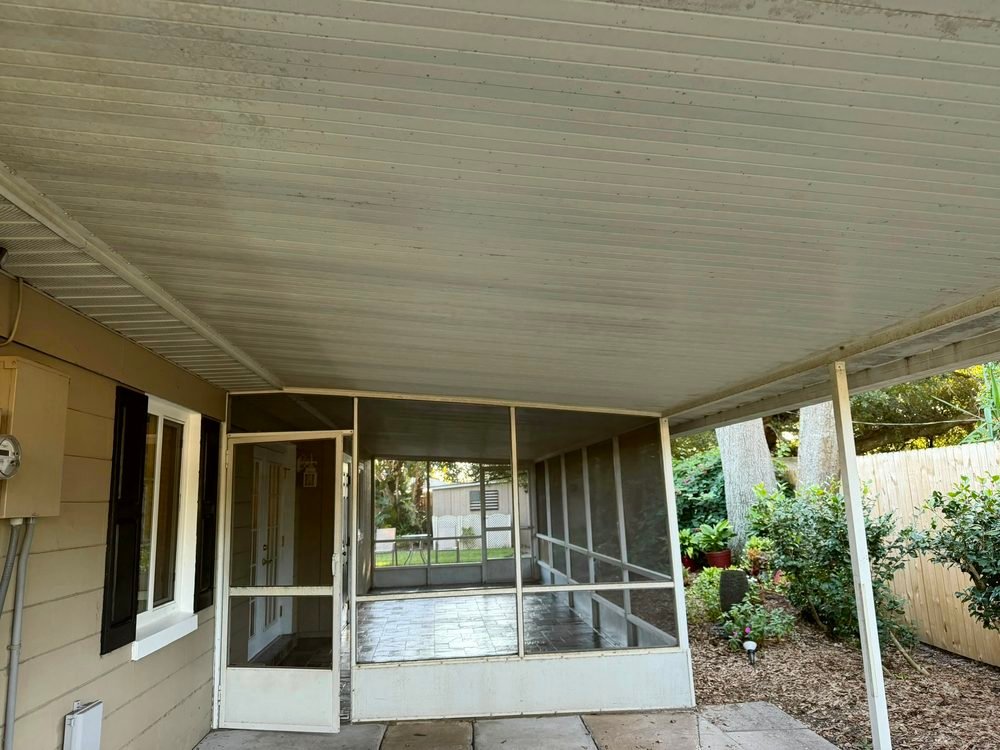 Before
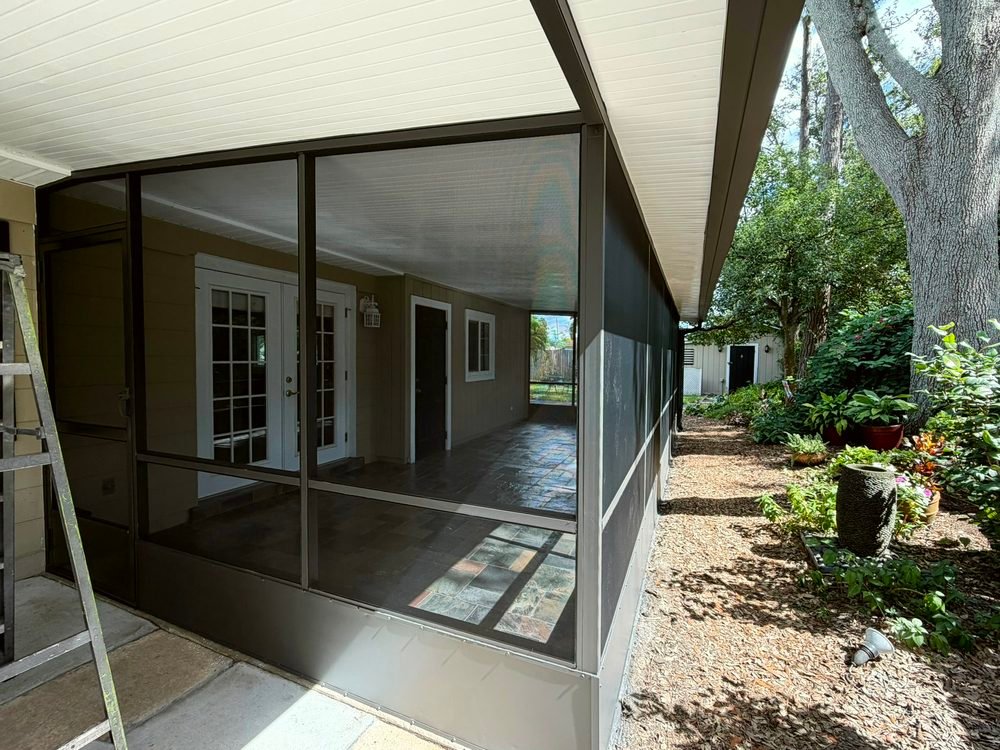 After
AfterMatching a Color to Your House
The cage takes up a big part of the view from the back of the house, so choose its color with the whole house in mind:
- Start with the windows. Bronze window frames and sliders point toward a bronze cage. White windows suggest white or ivory.
- Look at the roof and trim. Tile roofs and darker trim pair well with bronze or charcoal. Light roofs and trim leave room for lighter colors.
- Consider the backdrop. Against thick green landscaping, white stands out and bronze blends in. Decide which effect you want.
- Be honest about upkeep. If nobody's going to wash the frame a few times a year, a darker color will look clean for longer.
- See it in your own light. Colors shift between morning and afternoon sun. We bring samples to your home during the estimate so you can hold them against your walls before deciding.
Getting HOA Approval
Many South Florida communities control exterior colors, and that can include a screen enclosure. Your community's declaration and architectural guidelines spell out what needs approval. If yours requires it:
- Check the approved palette first. Some associations list exact paint codes for enclosures and trim.
- Submit the request with the color name and paint code, plus a photo of the house.
- Wait for written approval before scheduling the work, and keep a copy.
- Bring the approved code to your estimate. If your HOA names a specific paint code or brand, we will match it.
Same color, still worth asking. Some associations require an application even for a repaint in the current color. A quick email to the HOA or its management company settles it.
Changing Your Cage's Color
A white frame can be repainted bronze, and the reverse works too. The screen porch in the photos above went from white to dark bronze. A color change gets the full process:
- A pressure wash, then scraping and sanding wherever old paint is failing, so the new color bonds to a clean surface.
- A direct-to-metal bonding primer on every surface before any topcoat, which we do on every job.
- Two sprayed finish coats. A new color makes missed spots obvious, so every corner and underside has to be covered.
- Screens out where possible. With the mesh removed, every part of the frame is within reach, which is why a color change pairs well with a rescreen.
Repainting and rescreening in the same visit is a full restoration. Our pool cage restoration guide walks through the sequence step by step.
Making the Color Last
Sun and salt air wear down every finish in Florida. These habits help a new color hold up:
- Rinse the frame a few times a year with a hose and mild soap. A pressure washer held close can damage the painted finish.
- Aim sprinklers away from the cage. Well water stains show up fast, especially on white.
- Watch the screws. Rust bleeding from a fastener is an early sign the hardware needs attention.
- Match the coating to the location. For most homes, we use Sherwin-Williams SuperPaint Acrylic, which resists fading and mildew. Coastal homes get Direct-to-Metal Acrylic. Direct ocean frontage calls for Heavy Shield.
With proper prep and the right coating, 10 years or more is realistic for most South Florida homes. Homes right on the ocean need repainting sooner. Our pool cage painting guide covers costs and the signs it's time to repaint.
Frequently Asked Questions
What is the most popular pool cage color in Florida?
Can you paint a white pool cage bronze?
Does a dark pool cage make the pool area hotter?
Do I need HOA approval to change my pool cage color?
How long does pool cage paint last in Florida?
See the Color on Your House
Book a free on-site estimate, usually within 24 hours. We bring color samples to your home and match HOA-approved palettes before any paint goes on.