
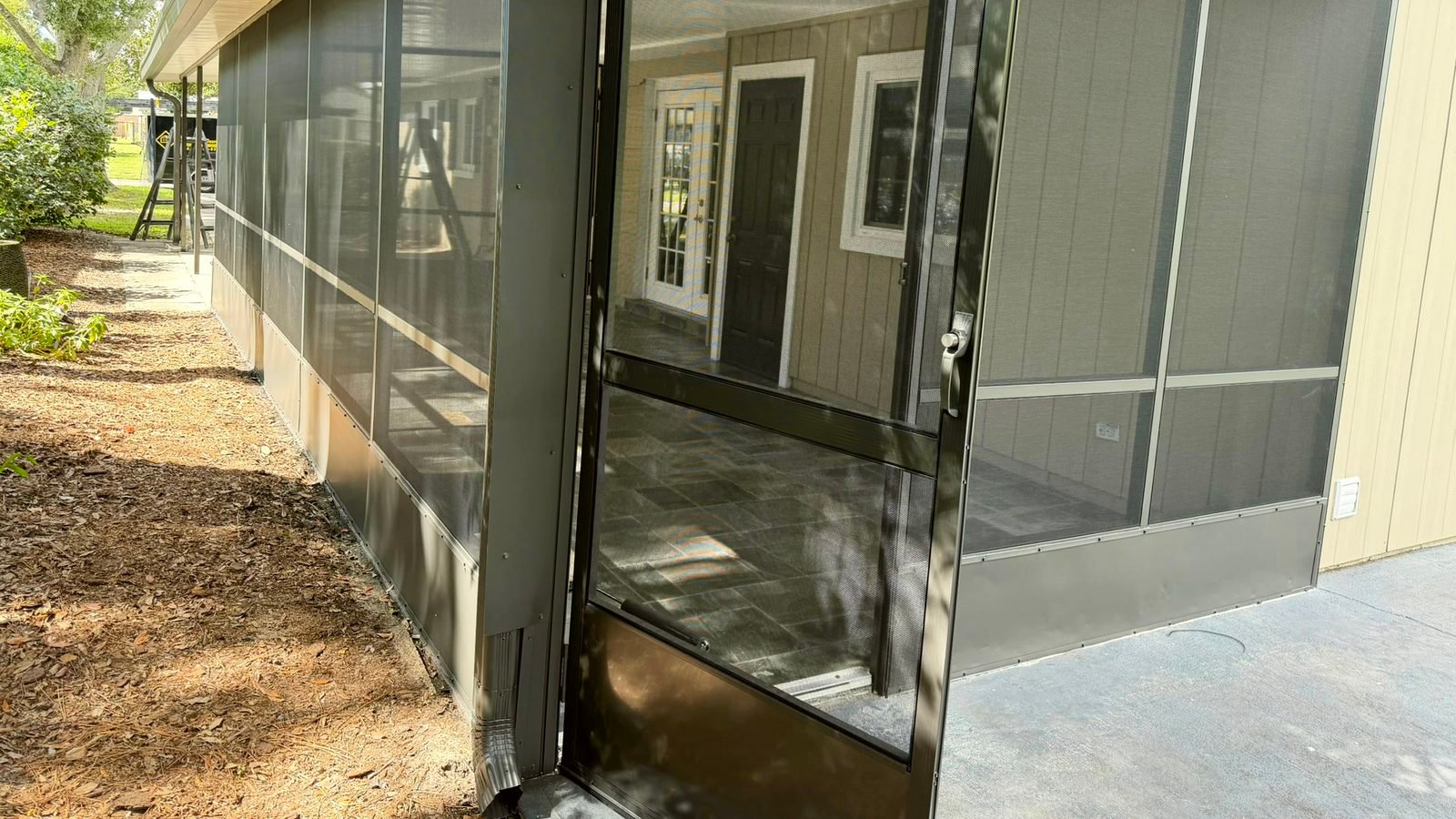
Patio screen door repair in South Florida is usually a small job that fixes something you deal with every day. The door is the moving part of a screened patio or pool enclosure, and every push and kick puts wear on it that the panels around it never get. Worn doors and missing sweeps are also usually where bugs get in, even when every panel is tight.
Why the Door Wears Out First
The panels stay put. The door swings every time someone heads to the pool or the grill. Kids push it with their hands and dogs push it with their paws, and once the closer wears out, the door bangs against the frame. That use loosens the spline and stretches the mesh, and it wears down the strip along the bottom edge.
Fixing the door rarely means touching the rest of the enclosure. Door rescreens, new sweeps, new kickplates and closer adjustments are among our most common screen repair calls.
The Parts That Fail
A screen door has its own frame and hardware. Here's what wears out:
| Part | What It Does | When It Needs Work |
|---|---|---|
| Door screen | The mesh in the door, usually split by a middle rail | Torn or bulging, or pulling out at a corner |
| Spline | The cord pressed into the frame channel to hold the mesh tight | Brittle or popping out, leaving the mesh slack |
| Kickplate | The solid panel across the bottom that takes knocks instead of the screen | Dented or loose, or missing altogether |
| Sweep | The strip along the bottom edge that closes the gap to the floor | Torn or worn down, or missing and leaving a gap underneath |
| Closer | The cylinder and arm that pull the door shut | The door drifts open or takes too long to close. It may also slam |
| Frame and screws | The door frame, its hinges and the screws holding it together | Loose screws, or a door that drags or misses the latch |
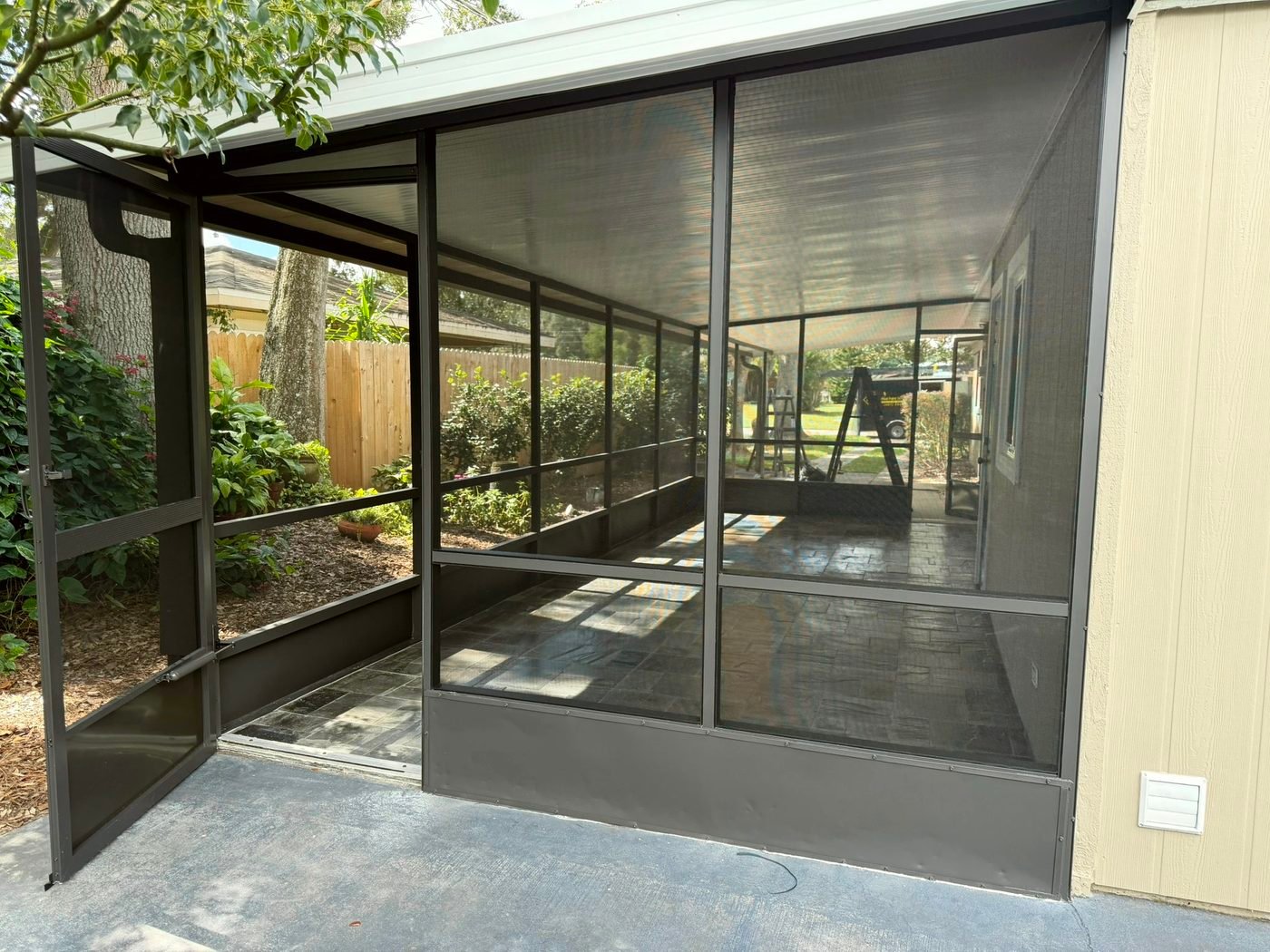
Signs Your Door Needs Work
You don't have to wait for a tear. Watch for these:
- Bugs inside the enclosure while the panels look fine. The bottom of the door is the first place to look.
- Daylight under the closed door.
- A torn door screen or a loose corner while the surrounding panels still sit flat.
- A door that won't close on its own, or one that slams.
- A door that rubs the frame or floor, or needs lifting to latch.
- A dented or loose kickplate, or one that's missing.
Each of these can be repaired without a full rescreen. Send us a photo or call, and we'll give you a ballpark price on the spot.
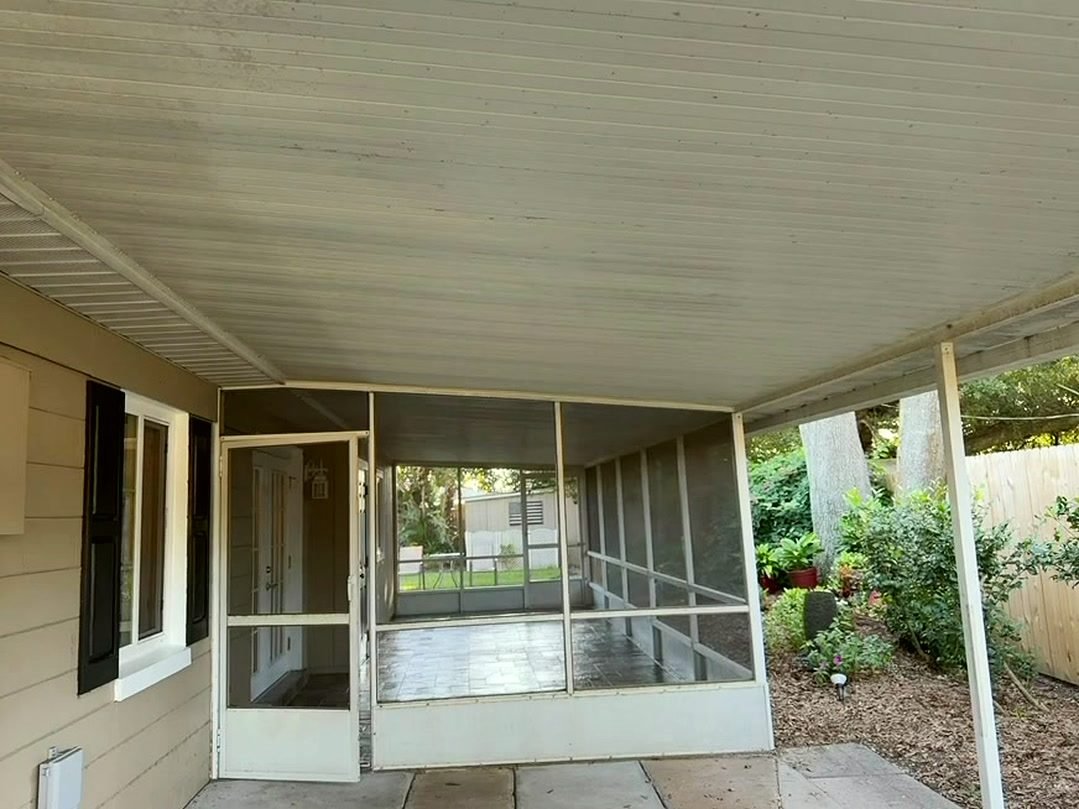
What a Repair Visit Covers
Door repairs follow the same steps as our other screen repair work.
1. A quick quote
A photo or a call gets you a ballpark price. If you'd like someone to look in person, we schedule on-site quotes within 24 hours.
2. Parts and mesh confirmed
We confirm which mesh and parts the job needs, then set a time with you. Most repairs are scheduled within the same week. Storm or emergency damage gets priority.
3. The repair
The owner is on site. We remove the old mesh and fit fresh mesh with new spline, tensioning the screen until it sits flat. Sweeps, kickplates and closers get replaced or adjusted as needed. Small jobs are often finished in the same visit when the right mesh is on the truck.
4. Hardware check and cleanup
We also check the rest of the enclosure for loose screws, broken closers and worn sweeps, and we quote any other work we find. The old screen and spline get bagged and hauled off.
5. The final walk
We walk through the repair with you and check that everything looks and feels right before we leave.
New spline every time. Old spline goes brittle in the Florida sun. Every patch and door rescreen gets fresh spline, pressed in and tensioned to match the rest of the enclosure.
Choosing Mesh for the Door
The door usually gets the same mesh as the rest of the enclosure. We match the existing weave and color so it blends in with the panels beside it. Our trucks carry the most common Florida weaves:
- Standard 18×14. Charcoal fiberglass with good visibility and airflow. The industry default.
- No-see-um 20×20. A tighter weave that keeps out the tiny biting insects common in coastal and waterfront areas.
- Pet resistant. Reinforced mesh that holds up to claws and paws. Worth considering for the door if your dog or cat pushes on it to get out.
We also install hurricane rated mesh. The lanai and patio screening page explains each option.
When It's More Than the Door
Sometimes a broken door is the first sign that the whole enclosure is getting old. We look at the panels and frame while we're there and tell you what we see. If a repair makes sense, we repair. If rescreening makes more sense, we'll explain why.
- Just the door: the surrounding panels are tight and clear, and the frame is solid. The door repair is the whole job.
- A few panels as well: we can swap a handful of damaged panels during the same visit. If the rest of the screen is solid, that costs less than a full rescreen.
- Most of the screen: mesh that has gone hazy or brittle, or sags across many panels, points to a full rescreen.
- The frame: chalky or peeling paint and rust streaks at the screws point to a repaint. Repainting and rescreening in one visit is a full restoration.
Our pool screen repair guide explains patching versus rescreening in more detail.
Frequently Asked Questions
Can you repair just the screen door without rescreening the patio?
How fast can a patio screen door be fixed?
Why do bugs still get in when my screens look fine?
Do you repair pool cage screen doors too?
Is there a warranty on screen door repairs?
Get the Door Closing Right Again
Send a photo or book a free estimate, usually within 24 hours. The owner is on every job, and we'll tell you honestly whether you need a door repair or something more.