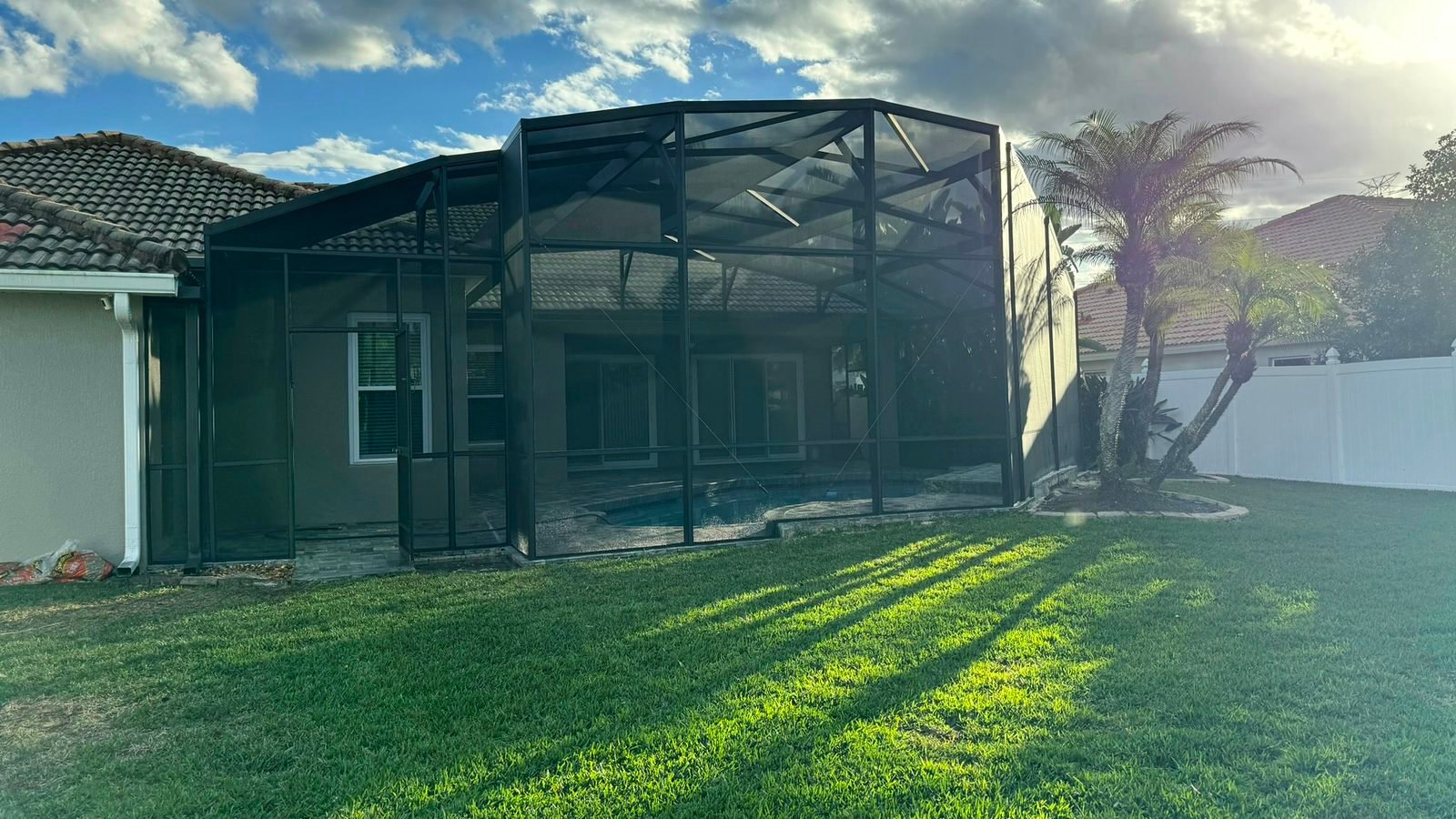
The best paint for pool cages in South Florida depends mostly on how much salt air reaches your house. An inland cage faces different conditions from one on the ocean, and we choose the coating accordingly. All three of our topcoats go over the same bonding primer, and how well the frame is prepped decides how long the finish lasts.
What the Finish Is Up Against
Aluminum doesn't rust. It oxidizes. Sun and salt air wear away the factory finish, and pool chemistry adds to that wear, leaving the frame chalky and discolored. Once the finish starts failing, the wear speeds up.
Steel screws and brackets have their own problem: rust. Orange streaks bleed onto the surrounding aluminum, so our repaints include rust treatment at the fasteners.
The coating has to grip smooth aluminum and hold its color through strong sun and humidity. Coastal cages also need protection against salt.
The Primer Under Every Coat
Every frame gets a full coat of Sherwin-Williams Direct-to-Metal Bonding Primer before any color goes on. It bonds to aluminum and has a rust-inhibiting formula. We use it under all three topcoats, on every job.
Paint rolled straight onto chalky, unprimed aluminum is how a rushed repaint starts peeling within a couple of years.
Ask about the primer. The topcoat gets the attention, but the primer is what holds it to the metal. If your quote doesn't name a primer, ask.
Three Topcoats, Three Exposures
We choose among three Sherwin-Williams topcoats based on the home's exposure:
| Coating | Where It Fits | What It Brings |
|---|---|---|
| SuperPaint Acrylic | Most homes, under typical South Florida pool cage conditions | Resists fading and mildew, with a smooth satin finish |
| Direct-to-Metal Acrylic | Coastal homes with constant salt air and humidity | Bonds directly to aluminum and is rated for salt air |
| Heavy Shield | Direct ocean frontage, with maximum UV exposure and constant coastal corrosion | Maximum film thickness and the longest service life |
Most homes: SuperPaint Acrylic
SuperPaint Acrylic is the residential standard and our most popular coating. It resists fading and mildew and dries to a smooth satin finish.
Coastal homes: Direct-to-Metal Acrylic
Salt air and humidity work on a coastal cage year-round. Direct-to-Metal Acrylic bonds straight to the metal for stronger adhesion. It's our preferred coating for these homes.
Oceanfront homes: Heavy Shield
Heavy Shield is the industrial grade option for cages facing the ocean directly. It goes on with maximum film thickness and has the longest service life of the three.
You don't have to choose among the three yourself. At the estimate, we look at the cage, your location and how exposed it is before recommending a coating. Our pool cage painting service page lists the same three options.
Why We Spray Instead of Roll
We apply two full coats with professional HVLP spray equipment. The spray reaches into corners and joints, across undersides and onto frame surfaces you can only see from a ladder. It leaves a factory-like finish without roller texture. No brush marks or drips, either.
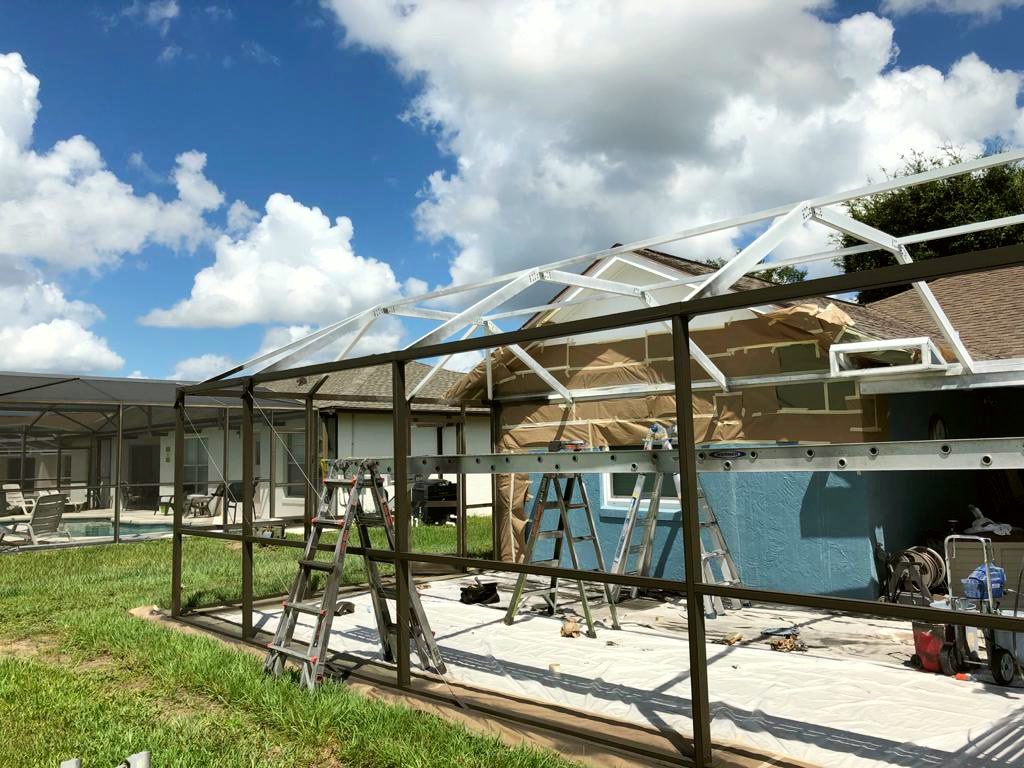
Spraying also creates overspray. Before we start, we mask the house, the landscaping and the screen panels and cover the pool. The pool and deck are off limits on spray days. During prep and between the two coats, light use is usually fine.
Prep Matters More Than the Can
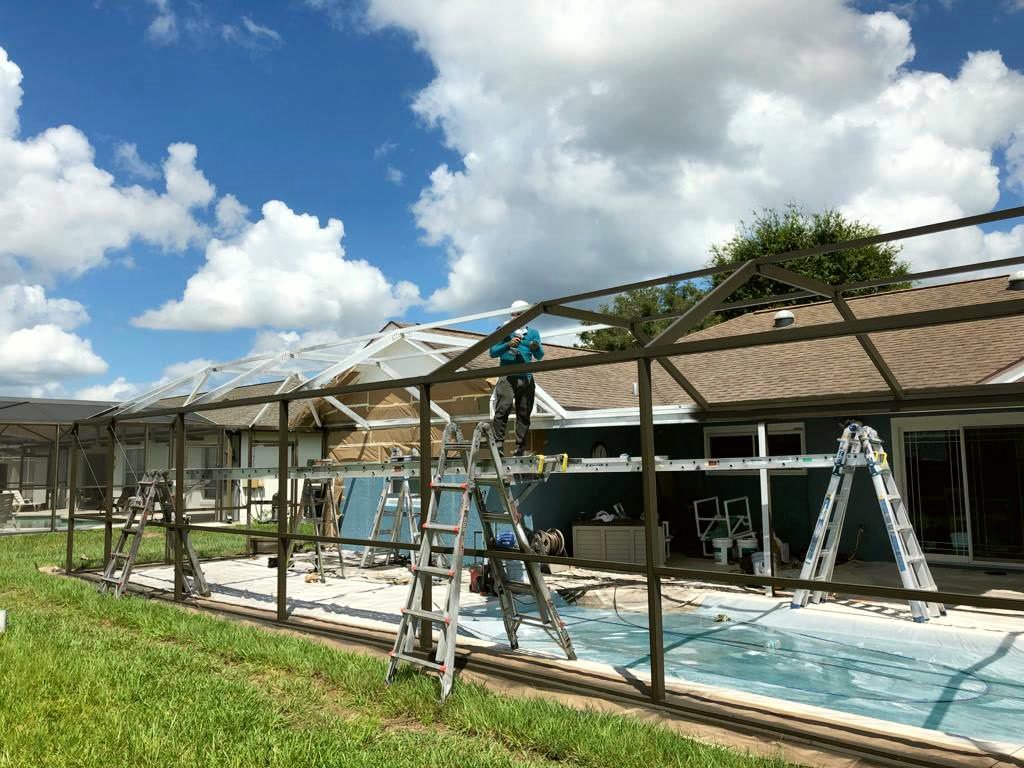
Even Heavy Shield won't hold onto a dirty, chalky frame. Before the primer goes on, we pressure wash the whole cage, scrape off failing paint by hand and sand the rough spots.
Prep is the step contractors are most tempted to shortcut. It decides how long any of these coatings will last.
We bring color samples to your house at the estimate. If your HOA specifies a paint code, we match it. Our pool cage paint colors guide explains how each shade wears in sun and rain.
Timing It for the Dry Season
Paint needs a dry surface. South Florida's rainy season ends in mid October, which makes the drier months that follow an easier window for exterior painting. There are fewer afternoon storms to work around.
Most residential cages take 3 to 5 days from pressure washing to cleanup. Larger and two story cages can take up to a week. Your written estimate lays out the schedule before work starts, and rain pushes painting back.
If your HOA requires color approval, submit the request early enough to have it before your start date. Painting during a rescreen gives the crew full access to the frame while the screens are out. Ask about combined pricing when we come out.
How Long the Finish Lasts
A well prepped repaint with the right coating can last 10 years or more on most South Florida homes. Direct ocean exposure means repainting a little sooner, which is why those homes get Direct-to-Metal Acrylic or Heavy Shield.
Every job includes a written workmanship warranty and the manufacturer's warranty on the coatings. We hand you both in person when the work is done. For pricing and the signs it's time to repaint, see our pool cage painting guide.
Frequently Asked Questions
What is the best paint for an aluminum pool cage?
Does a pool cage need primer before painting?
Is it better to spray or roll a pool cage?
What paint should a coastal home use on its pool cage?
Can I use my pool while the cage is being painted?
Is there a warranty on pool cage painting?
Get the Right Coating for Your Cage
Book a free estimate and we'll come out, usually within 24 hours. We'll bring color samples, look at your cage and recommend a coating based on its exposure.