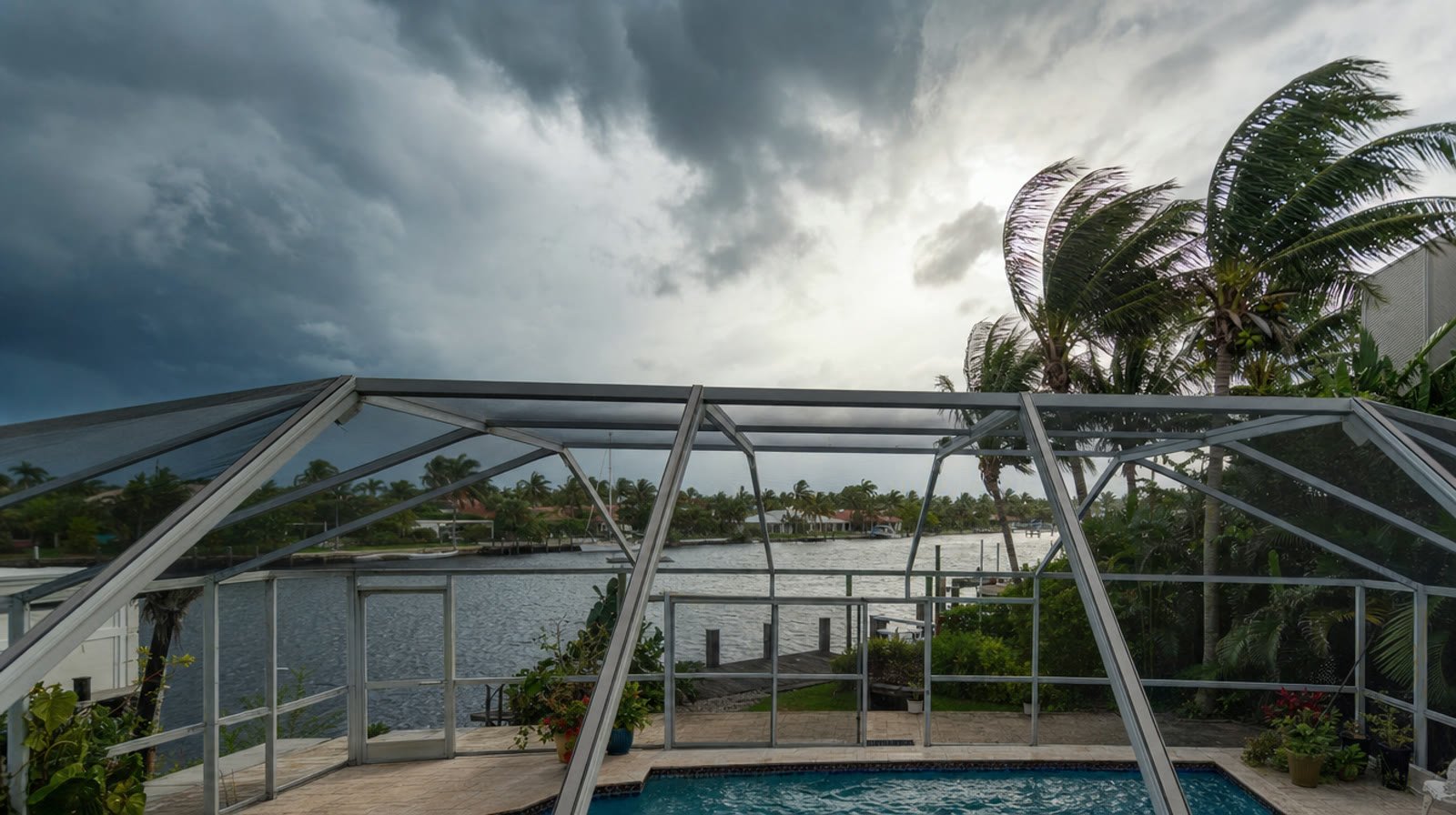
Pool cage hurricane prep in South Florida comes down to one idea: a screen enclosure survives a storm by letting wind pass through it, not by fighting it. Your job is to remove everything that can turn into a projectile, make sure the mesh and fasteners are sound, and document the cage before the wind arrives. Here is the full checklist, hour by hour, plus what to do the moment the storm clears.
Why Screen Enclosures Fail in a Storm
Aluminum pool cages are engineered to flex and to shed wind. When one comes apart, it is almost never because the wind was simply too strong for the design. It is because of something that was already wrong before the first band arrived:
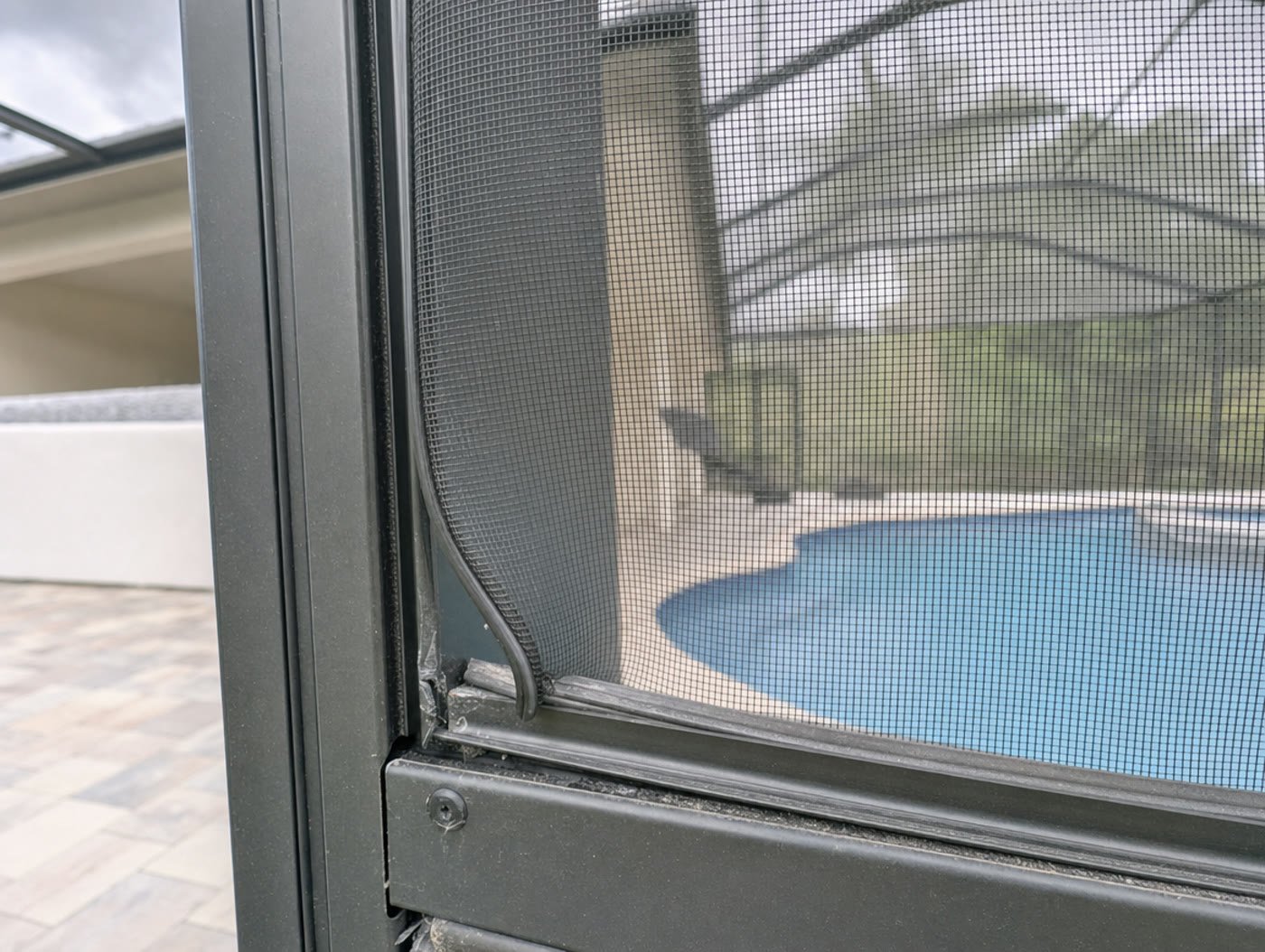
- Brittle, sun-damaged mesh that has lost its give, so instead of tearing free cleanly it grabs wind like a sail and pulls on the frame.
- Loose or lifted spline that lets a panel edge peel out, turning one panel into a wind scoop.
- Corroded fasteners and anchors at the deck, where rusted bolts no longer hold the uprights down.
- Objects left inside the enclosure, which become projectiles that punch out panels from the inside.
- Overhanging branches that snap onto the screened roof and take several panels with them.
The counterintuitive part: screen mesh is a sacrificial part. It is supposed to give way so the aluminum structure survives. A cage that loses a few panels but keeps its frame straight is a cheap fix. A cage whose frame twisted because the mesh held on too long is not.
Your Storm Season Countdown Checklist
Most of the work that saves a pool cage happens long before a storm is named. Here is the timeline we give homeowners across Palm Beach County:
| When | What to Do | Why It Matters |
|---|---|---|
| Before June 1 | Inspect and rescreen brittle panels, tighten fasteners, treat rust | Sound mesh and hardware is the single biggest factor in survival |
| 72 hours out | Trim overhanging limbs, photograph the whole cage, confirm insurance | Crews and tree services book up fast once a storm is named |
| 48 hours out | Clear furniture, planters, toys, grills and decor from the enclosure | Loose objects cause most interior panel damage |
| 24 hours out | Secure screen doors, check the pool is full, final walk and photos | A swinging door tears its own frame and the panels beside it |
A few specifics that homeowners often get wrong:
- Do not drain the pool. The water weight helps hold the deck and structure, and an empty pool can float or crack in saturated ground.
- Do not tie the frame down with ropes or straps. Bracing a cage that is designed to flex concentrates stress and bends beams.
- Latch the screen doors rather than leaving them free to swing, and take off any lightweight door closers that can be torn loose.
- Move it out, do not stack it in a corner. Furniture stacked inside the cage still moves in 90 mph gusts. Put it in the garage.
- Photograph everything. Wide shots of each wall, the roof, and close ups of any pre existing damage, all with today's date.
Should You Remove the Screens?
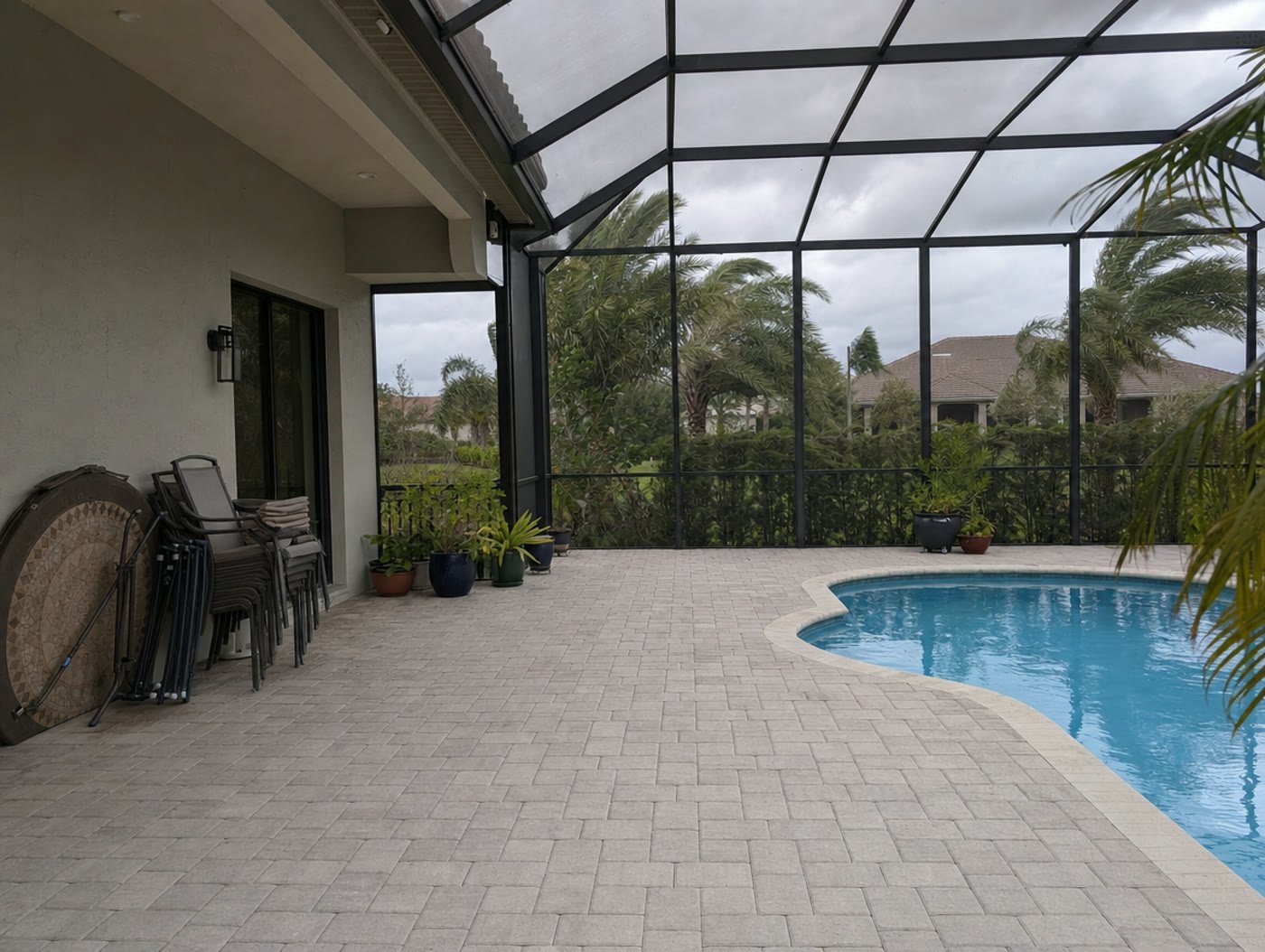
This is the question we get more than any other during storm season, and the honest answer for most homeowners is no.
Screen mesh is meant to be the weak point. When wind pressure builds, panels tear away and the load stops transferring into the aluminum. Pulling the screens yourself is a large, slow job, and a half finished enclosure with some panels out and some in can load the frame unevenly. Most people who start cutting panels the day before landfall do not finish.
- Leave the screens in place for tropical storms and for most hurricane watches. Focus your time on clearing the enclosure instead.
- Consider removing or cutting a few panels only when a major hurricane has a direct hit forecast, your cage is older, and you have the time and access to do it safely.
- Never climb on the roof panels of a screen enclosure. They are not walking surfaces, and a fall onto a pool deck is a far worse outcome than lost mesh.
If your screening is already brittle, the better move is to fix it before the season rather than gamble mid storm. A fresh rescreen with new spline holds tension and releases predictably. You can read the full breakdown in our guide to pool screen repair.
Screens looking tired before a storm?
We will tell you straight whether it holds another season or needs mesh now.
After the Storm: What to Check First
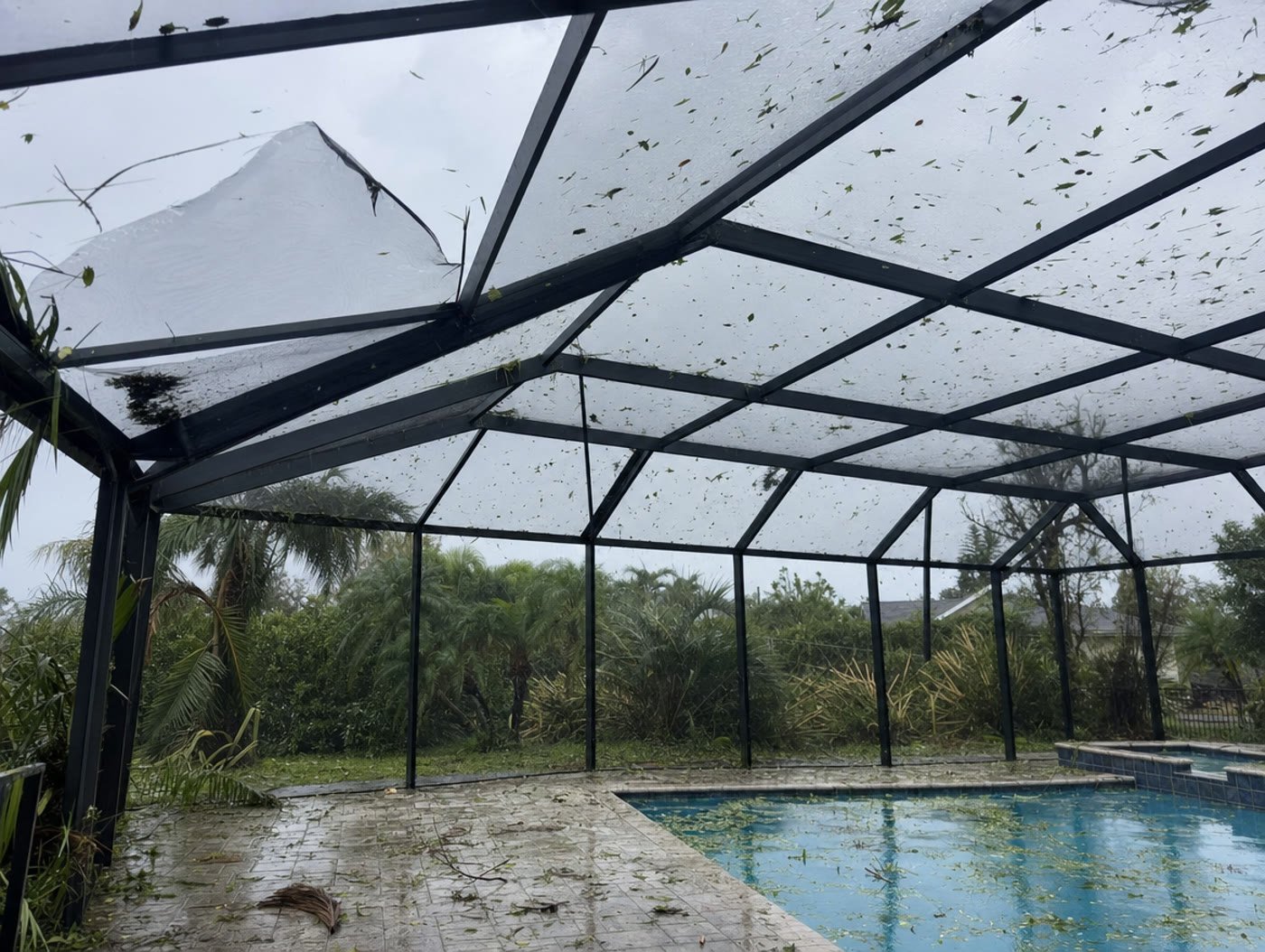
Once conditions are safe, walk the enclosure before you clean anything up. Damage assessment is easier and claims go smoother when the scene is untouched.
1. Look before you touch
From a safe distance, check for bent or separated beams, sagging roof sections, and any part of the structure leaning. A compromised cage can come down while you are under it.
2. Photograph everything first
Wide shots of every elevation, then close ups of torn panels, popped anchors, and any debris still resting on the structure. Do this before removing a single branch.
3. Check the anchors and fasteners
Look where the uprights meet the deck. Popped bolts, cracked concrete, or a base plate that has lifted are structural findings, not cosmetic ones.
4. Clear debris carefully
Pull branches off the screened roof from the ground with a pole where you can. Weight left sitting on panels keeps stretching mesh and can bend framing.
5. Get an assessment before repairs
Have the cage looked at before you commit to anything, especially if you plan to file a claim. Panels are quick to replace; frame damage changes the whole conversation.
Insurance and Documentation
Screen enclosures sit in an unusual corner of Florida homeowners policies, and the details vary more than people expect:
- Separate limits are common. Many policies cover screen enclosures under their own sub limit, sometimes with a separate hurricane deductible.
- Mesh is often excluded even when the aluminum structure is covered. Read the endorsement, not just the summary page.
- Dated photos matter. Adjusters need to see the pre storm condition. A folder of photos taken every spring is the cheapest insurance you will ever buy.
- Keep your paperwork. Invoices for rescreening, repainting, and repairs prove the cage was maintained, which heads off a depreciation argument.
Do this today: pull out your phone, walk the enclosure, and take twenty photos. It takes five minutes and it is the difference between a documented claim and a debate with an adjuster.
Off Season Work That Pays Off
Everything that makes a cage storm ready is normal maintenance done on time. The list is short:
- Rescreen brittle panels before the season rather than after. Mesh that tears at a touch will not last a gust. See our guide to lanai and patio screening for mesh options.
- Treat rust early. Corroded fasteners and base plates are what actually let go in high wind. A restoration repaint addresses the metal and the coating at the same time.
- Tighten and replace hardware across the cage, especially at the deck line and around doors.
- Keep trees trimmed back year round so nothing overhangs the screened roof.
- Fix small tears immediately. A coin sized hole in June is a missing panel in September.
Booking this work in spring also means you are not waiting behind half the county for a crew. After a named storm, every screening contractor in South Florida is weeks deep.
Frequently Asked Questions
How do I prepare my pool cage for a hurricane in Florida?
Should I remove my pool cage screens before a hurricane?
Does homeowners insurance cover pool cage damage in Florida?
What should I check on my pool cage after a storm?
When is the best time to rescreen before hurricane season?
Get Storm Ready Before the Next Watch
Free, on site estimates across Central and South Florida, usually within 24 hours. Honest assessments on mesh, rust, and hardware, and a crew that shows up when they say they will.