
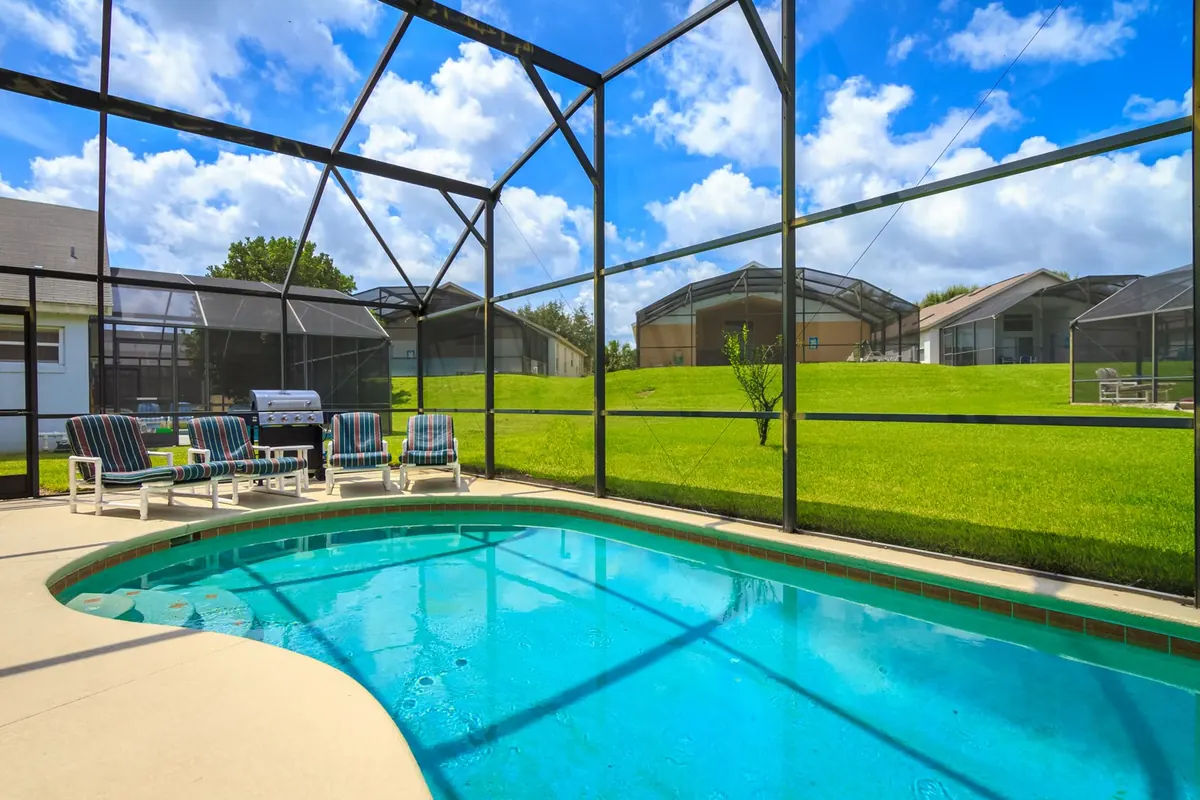
Pool screen repair in South Florida typically costs $75 to $250 per panel, and most repair visits wrap up in a couple of hours. The catch is timing. Florida sun makes aging mesh brittle, and summer storms turn small tears into missing panels, so a quick repair now routinely saves a four-figure rescreen later. Here is what repairs cost, when a patch is enough, and how to tell when screens are past saving.
Pool Screen Repair Cost in South Florida
For most Central and South Florida homes, screen repair is one of the cheapest fixes on the property. These are typical 2026 numbers:
| Repair | Typical Cost | Average |
|---|---|---|
| Single panel replacement | $75 to $250 | $140 |
| Screen door rescreen | $85 to $200 | $130 |
| Multiple panels (3 to 10) | $200 to $700 | $450 |
| Full pool cage rescreen | $1,400 to $3,000+ | $2,200 |
What moves the number:
- Panel location, since roof panels and second-story sections need staging that ground-level walls do not.
- Mesh type, because No-See-Um, pet screen, and Florida Glass cost more than standard 18/14 fiberglass.
- How many panels, as each added panel in the same visit costs less than the first.
- Frame condition, because popped spline channels and corroded fasteners get corrected before new mesh goes in.
Money saver: batch your repairs. The most expensive part of a small screen job is getting a crew to your home, so having every worn panel and the screen door done in one visit costs far less than three separate calls.
Patch, Replace the Panel, or Rescreen?
Not every tear needs the same fix, and paying for more than you need is as bad as ignoring the problem. The honest hierarchy:
- Patch it when the hole is smaller than a coin, the mesh around it is young and flexible, and looks do not matter much in that spot. Treat a patch as a bridge, not a destination.
- Replace the panel for anything bigger: real tears, pet damage, storm punctures, or mesh pulling out of the spline channel. New mesh in one panel restores full strength and blends far better than any patch.
- Rescreen the enclosure when failures stop being isolated. If mesh crumbles when pressed, panels are chalky and sagging across the cage, and every month brings a new hole, the material itself is done.
A crew that does both jobs will tell you which side of the line you are on. That is exactly what our screen repair service visit is for, and if the verdict is bigger, pool cage rescreening resets the whole enclosure at once.
Signs Your Screens Are Failing
Screens announce their retirement well in advance. Walk your enclosure and look for:
- Visible tears or holes, even small ones, because Florida weather enlarges them fast.
- Panels that flap or ripple in wind instead of sitting drum-tight.
- Spline lifting out of its channel, letting mesh edges pull free.
- Mesh that tears at a touch, the classic sign of UV-brittled fiberglass.
- Chalky, whitened panels that have visibly faded next to newer mesh.
- Bugs showing up inside, since mosquitoes and no-see-ums find gaps long before you spot them.
- More debris in the pool than usual, a sign mesh is no longer catching what it used to.
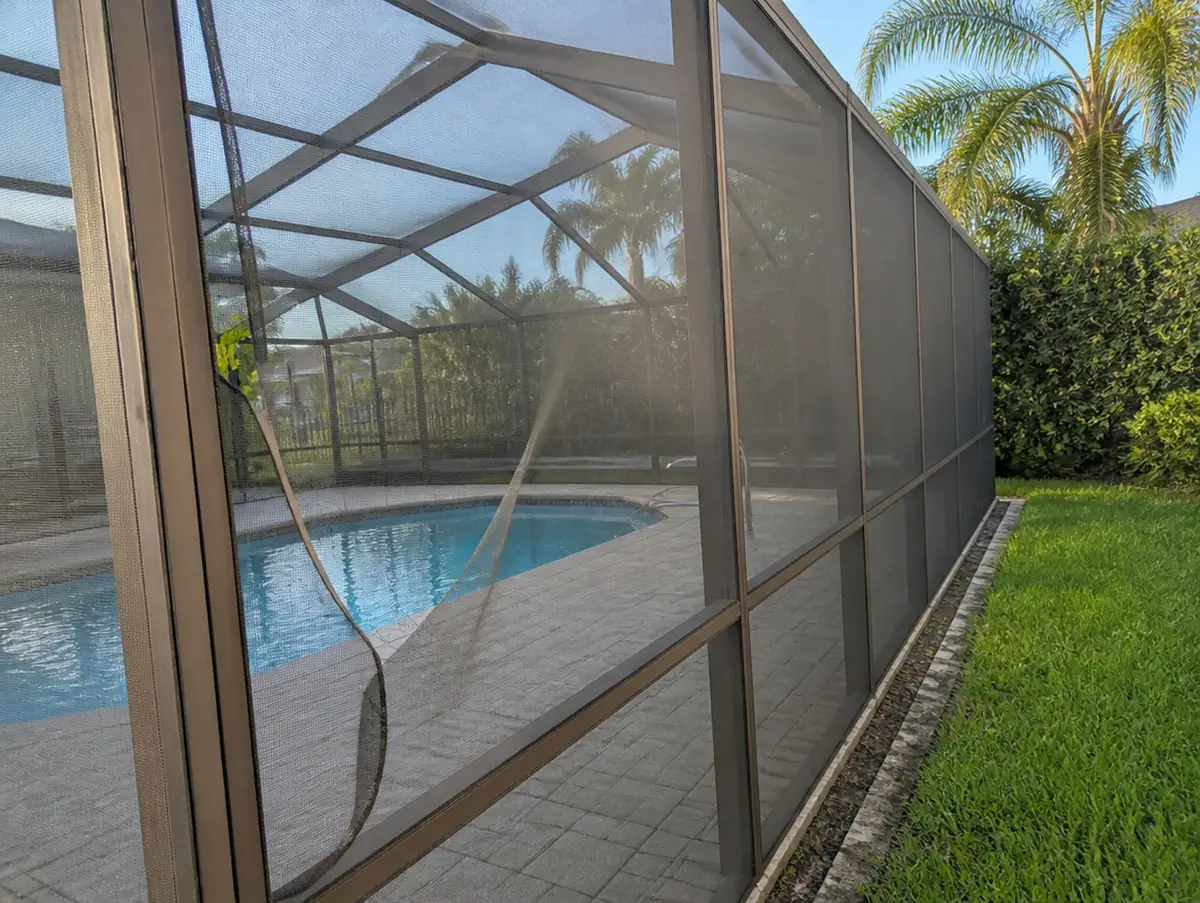
Why Fast Repair Matters in Florida
In most states a torn screen is a cosmetic issue. In South Florida it is a countdown:
- Storm season is unforgiving. Wind grabs loose mesh and propagates a small tear across the panel, and sometimes takes neighboring panels with it.
- The bugs never take a season off. Mosquitoes and no-see-ums exploit any gap year round, and one bad panel undoes the whole enclosure's job.
- Your pool pays the price. Every gap is leaves, pollen, and seed pods in the water and more hours on the skimmer.
- Small fixes stay small. A $140 panel today is routinely a several-panel job by next summer, because failing mesh rarely fails alone.
How Professional Screen Repair Works
A repair visit is quick, but the difference between tidy and sloppy shows for years. Here is the process a quality crew follows:
1. Walk the enclosure
Every panel gets checked, not just the one you called about. You get a straight list of what is failing now and what is close.
2. Match the mesh
New mesh is matched to what is on the enclosure, whether standard fiberglass, No-See-Um, pet screen, or Florida Glass, so repairs do not turn the cage into a quilt.
3. Strip the old panel
Old mesh and spline come out completely and the channel is cleaned. New mesh over old spline is the shortcut that fails first.
4. Roll in and tension
Fresh mesh is rolled in with new spline and pulled to even, drum-tight tension that matches the surrounding panels.
5. Doors, hardware & cleanup
Screen doors get their sweep and closer checked, loose fasteners are snugged, and every scrap of old mesh leaves with the crew.
DIY vs. Calling a Pro
A ground-level panel with a spline roller from the hardware store is a fair Saturday project, and we will never pretend otherwise. Where DIY goes wrong in Florida:
- Height. Roof panels and two-story gables mean ladders, staging, and real fall risk over a pool deck or the water itself.
- Tension. Too loose flaps and fails early, too tight bows the frame. Even tension across a big panel takes practice.
- Spline sizing. The wrong diameter feels fine going in, then releases the mesh in the first storm.
- Mesh matching. Off-the-shelf mesh next to No-See-Um or solar mesh sticks out permanently.
If it is one easy panel, go for it. If it is height, multiple panels, or specialty mesh, a pro visit is cheap insurance. When screens fail alongside a chalky, rusting frame, it may be worth reading our guide to pool cage painting, and if the whole lanai is due, see lanai & patio screening for the full-rescreen picture.
Frequently Asked Questions
How much does pool screen repair cost in South Florida?
Can you patch a pool screen instead of replacing the panel?
How often do pool screens need replacing in Florida?
Should I repair my pool screens before hurricane season?
Do you repair screen doors as well?
Fix the Screens Before the Next Storm Does
Free, on-site estimates across Central and South Florida, usually within 24 hours. Honest patch-or-replace advice, matched mesh, and repairs that disappear into the enclosure.