
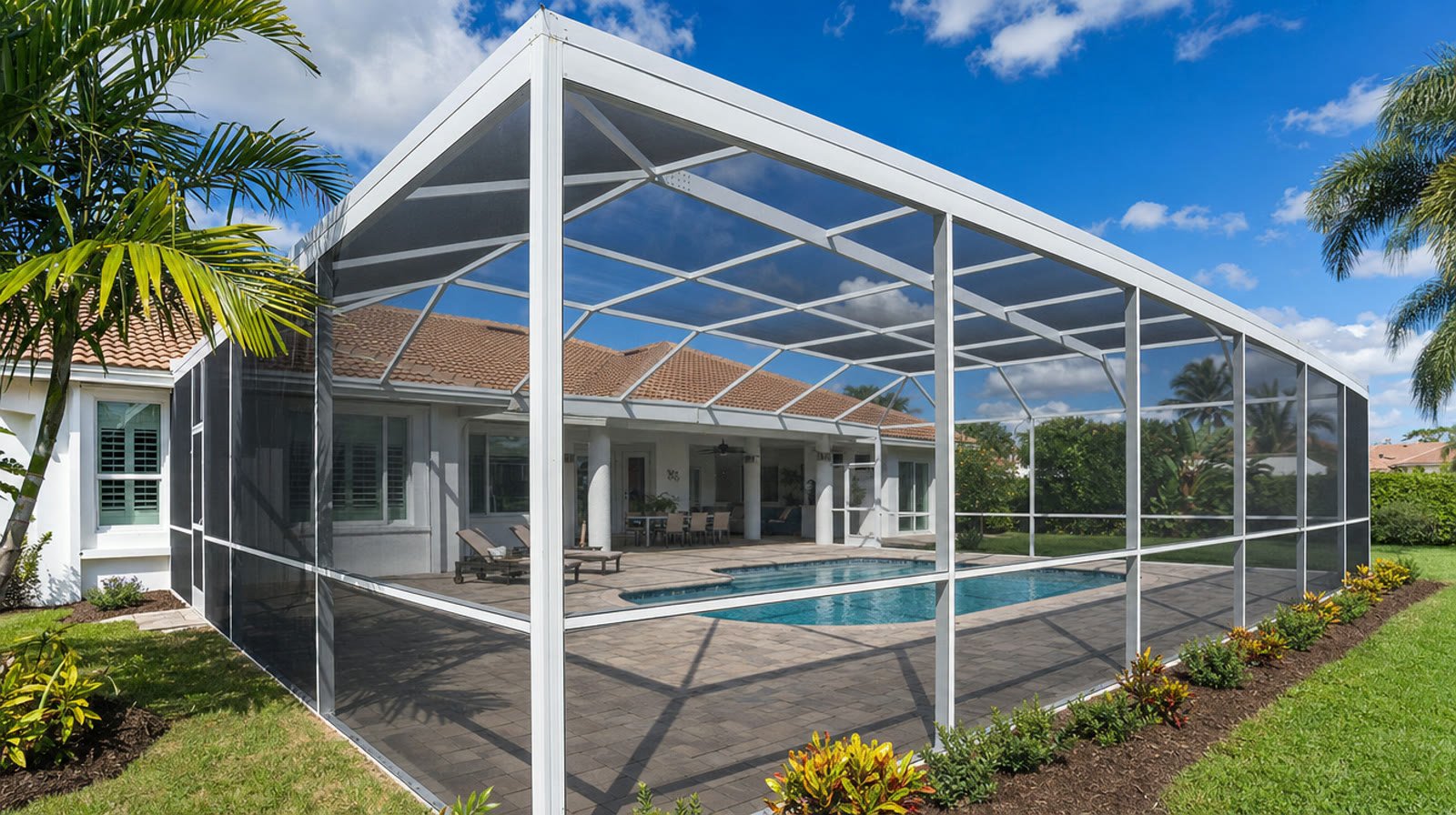
Choosing between pool cage repair and replacement in South Florida usually comes down to a single question: is the aluminum structure still sound? Replacement runs $8,000 to $25,000 or more, while restoring an existing cage with new mesh, hardware, and paint typically lands between $1,400 and $3,500. Most cages that look finished are candidates for restoration, not demolition. Here is how to tell which one you have.
Repair vs. Replacement Cost
The gap between restoring a cage and replacing it is not close. These are typical 2026 numbers across Central and South Florida:
| Option | Typical Cost | Best For |
|---|---|---|
| Single panel replacement | $75 to $250 | Isolated damage |
| Full rescreen | $1,400 to $3,000 | Brittle mesh, sound frame |
| Restoration repaint | $900 to $3,500 | Rust and chalking |
| Rescreen plus repaint together | $2,300 to $6,000 | Full refresh in one visit |
| Full cage replacement | $8,000 to $25,000+ | Structural failure only |
Replacement carries costs that repair simply does not: engineering and permit fees, demolition and disposal of the old structure, new footings or deck work, and a build that has to meet current wind load code. That is where the money goes, and it is why the number jumps so far.
Bundling saves real money. Rescreening and repainting in the same visit costs far less than two separate mobilizations, because prep, masking, and staging happen once.
When Repair Is the Right Call
Restoration is the answer far more often than homeowners expect. Repair and refresh when:
- The beams are straight and solid, even if the finish is chalky, faded, or surface rusted.
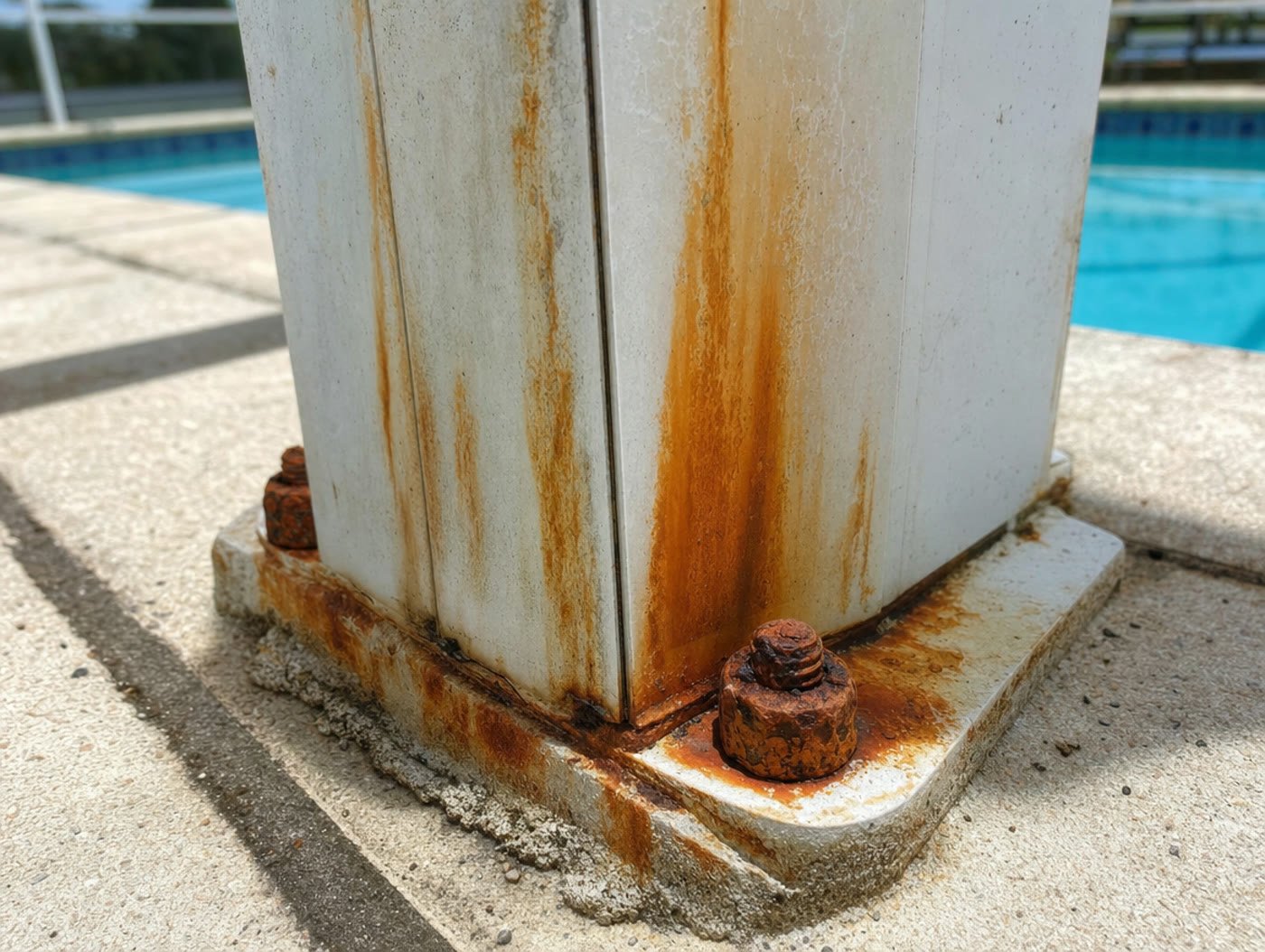
- Rust is limited to fasteners, brackets, and surface spots rather than eating through the metal.
- The mesh is the main problem, which is the usual story on a cage in the 8 to 12 year range.
- Damage is isolated to a few panels, a door, or one section after a storm.
- The layout still works for you and you are not changing the footprint of the enclosure.
A cage in this condition can be brought back to near new for a fraction of replacement cost, and the work is measured in days rather than weeks. Our guides to pool cage rescreening cost and pool cage painting break down each side of that refresh.
When Replacement Makes Sense
There is a real line, and these are the findings that cross it:
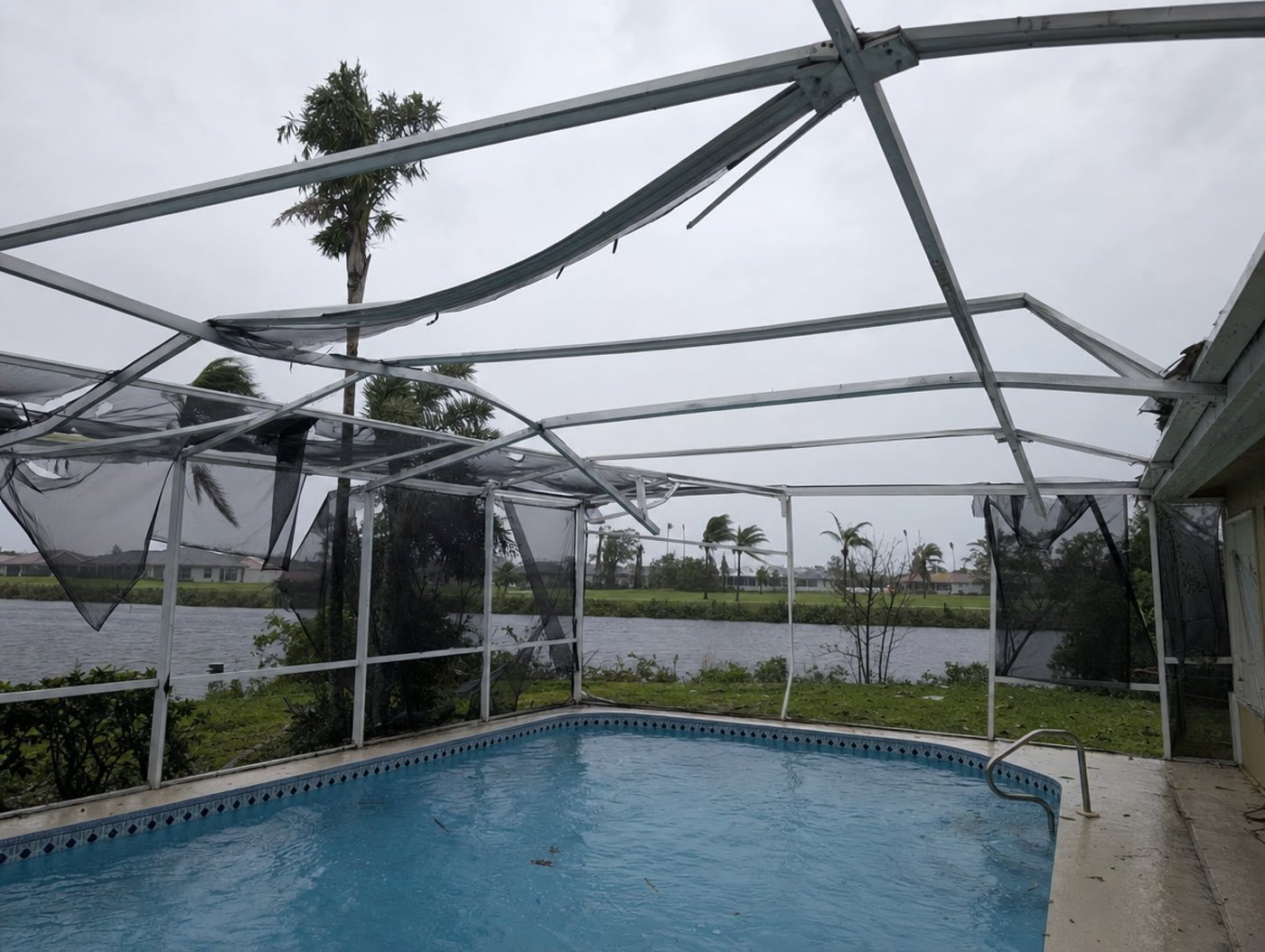
- Bent, buckled, or twisted beams that no longer sit true. Aluminum that has yielded does not come back.
- Metal pitted through or soft enough to flex under hand pressure, especially at the base of uprights.
- Failed connections where sections have pulled apart at the joints or fasteners no longer have sound metal to bite into.
- Anchors pulled out of the deck, or concrete cracked and spalled around the base plates.
- Widespread storm damage across multiple sections, which is often an insurance claim rather than a repair ticket.
- A major remodel where you are changing the footprint or the enclosure has to be brought to current code anyway.
Notice what is not on that list: faded paint, rust streaks, torn screens, and a tired look. Those are finish problems, and finish problems are repairs.
Inspect Your Cage in 15 Minutes
You can get a reliable read on your own cage before anyone quotes you. Walk it with this order:
1. Sight down the beams
Stand at one corner and look along each horizontal beam like a carpenter checking a board. They should read straight. Waves, dips, or twists are structural findings.
2. Check the base of every upright
Look where the posts meet the deck. Press the metal near the base. Solid is fine, even with rust streaks. Soft, flaking, or crumbling is not.
3. Test the mesh
Press a panel with your palm. Springy and tight means healthy. Crackling, or fibers that tear at a touch, means the mesh is done regardless of frame condition.
4. Look at the connections
Check where beams meet uprights and where the roof ties in. Gaps, separated joints, and missing fasteners matter far more than surface appearance.
5. Watch how it moves
On a breezy day, a healthy cage flexes slightly and evenly. Sections that shudder, rattle, or move independently point to loose connections.
Quick rule: if everything you wrote down is about how the cage looks, you need a repair. If anything you wrote down is about how the cage stands, get it assessed before you spend a dollar on cosmetics.
What Actually Wears Out First
Understanding the different clocks running on your enclosure makes the decision obvious:
| Component | Typical Life in South Florida | Fix |
|---|---|---|
| Screen mesh | 8 to 12 years | Rescreen |
| Paint and coating | 8 to 12 years | Repaint |
| Fasteners and hardware | 10 to 15 years | Replace hardware |
| Aluminum structure | 25 to 30+ years | Rarely needs work |
The pattern is consistent: the parts that wear out are the cheap ones. A twelve year old cage that looks rough is usually a cage that needs its 8 to 12 year items done, not a cage at the end of its life. Coastal, canal front, and saltwater pool homes sit at the shorter end of every range.
Getting an Honest Assessment
The uncomfortable truth is that replacement is a much bigger ticket, so it is worth asking questions that separate a real evaluation from a sales pitch:
- Ask what specifically is structural. A straight answer names beams, connections, or anchors. A vague answer about age is not an assessment.
- Ask to see it. Anything genuinely failed can be pointed at and photographed.
- Ask about the repair path. Even when replacement is right, a good contractor can explain exactly why restoration will not work.
- Get a second opinion on any replacement quote, particularly if the same visit started as a screen repair call.
- Confirm licensing and insurance, and for replacement, that permits and engineering are included in writing.
If your screens are the real issue, a targeted screen repair or full rescreen solves it for a small fraction of a rebuild. And with storm season underway, our hurricane prep checklist covers what to do with the cage you have right now.
Frequently Asked Questions
Is it cheaper to repair or replace a pool cage in Florida?
How long does an aluminum pool cage last in South Florida?
When does a pool cage need to be replaced instead of repaired?
Do I need a permit to replace a pool cage in Florida?
Can a rusted pool cage be saved?
Not Sure Which One You Need?
Free, on site estimates across Central and South Florida, usually within 24 hours. We will tell you honestly whether your cage is a repair or a replacement, and show you why.