
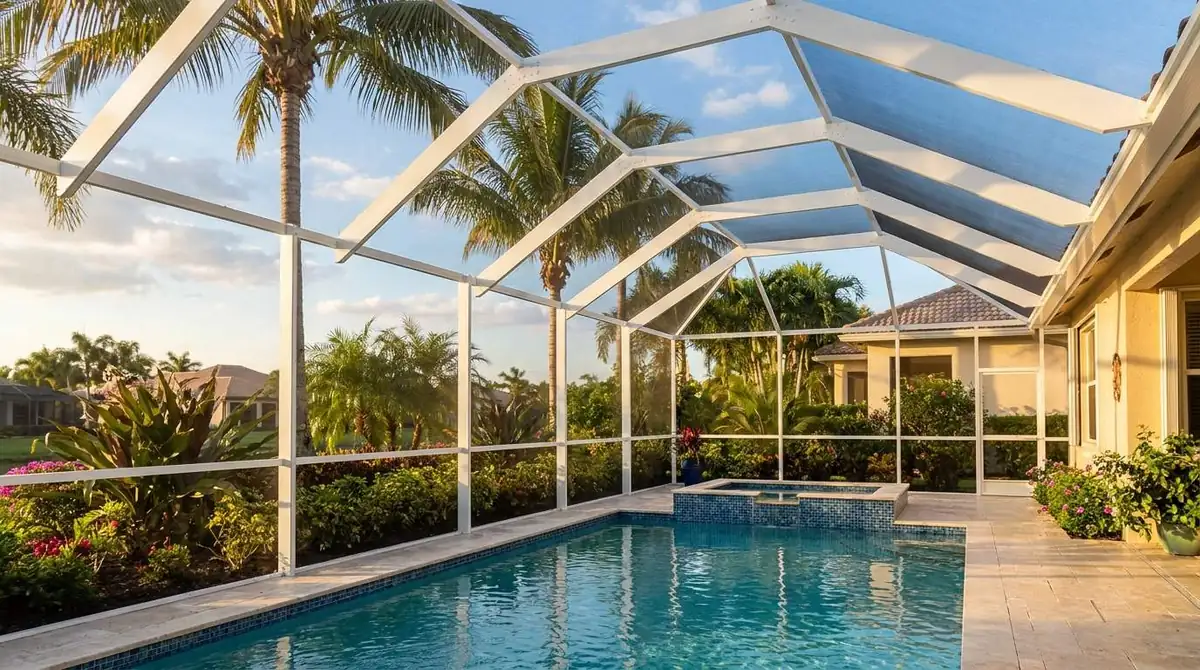
Professional pool cage painting in South Florida typically runs $900 to $3,500 depending on the size and condition of your screen enclosure — and a proper rust-restoration repaint can add 10 to 15 years to an aluminum cage that would otherwise corrode straight through in the salt air. Here is exactly what you pay, how the process works, why Florida cages rust in the first place, and how to know when it is time to repaint rather than replace.
Pool Cage Painting Cost in South Florida
Most homeowners in Central and South Florida spend somewhere between $900 and $3,500 to professionally repaint a pool cage in 2026. The single biggest factor is the size of the enclosure, but rust severity, frame height, and the type of coating all move the number. Here is what real jobs look like:
| Cage Size | Typical Repaint Cost | Average |
|---|---|---|
| Small (under 600 sq ft) | $900 – $1,500 | $1,200 |
| Medium (600–1,200 sq ft) | $1,400 – $2,400 | $1,900 |
| Large (1,200–2,000 sq ft) | $2,300 – $3,500 | $2,900 |
| Heavy rust restoration (add-on) | +$300 – $1,200 | varies |
Those figures assume a full prep-and-spray repaint with a direct-to-metal coating. The things that push your quote up or down:
- Cage size & panel count — more aluminum means more prep, masking, and coating time.
- Rust & corrosion severity — spot-rusted screws cost little; structural rust pitting needs grinding, priming, and sometimes beam replacement.
- Height & access — two-story cages and tight side yards add ladder and scaffold time.
- Coating choice — standard direct-to-metal enamel vs. premium fluoropolymer or factory-match colors.
- Extras — repainting super gutters, doors, kick plates, and fasteners while the crew is on site.
Reality check: A full cage repaint quoted under $700 in Florida almost always means a quick roller touch-up over un-prepped, still-rusting metal. The rust bleeds back through within a season. Real prep is what you are paying for.
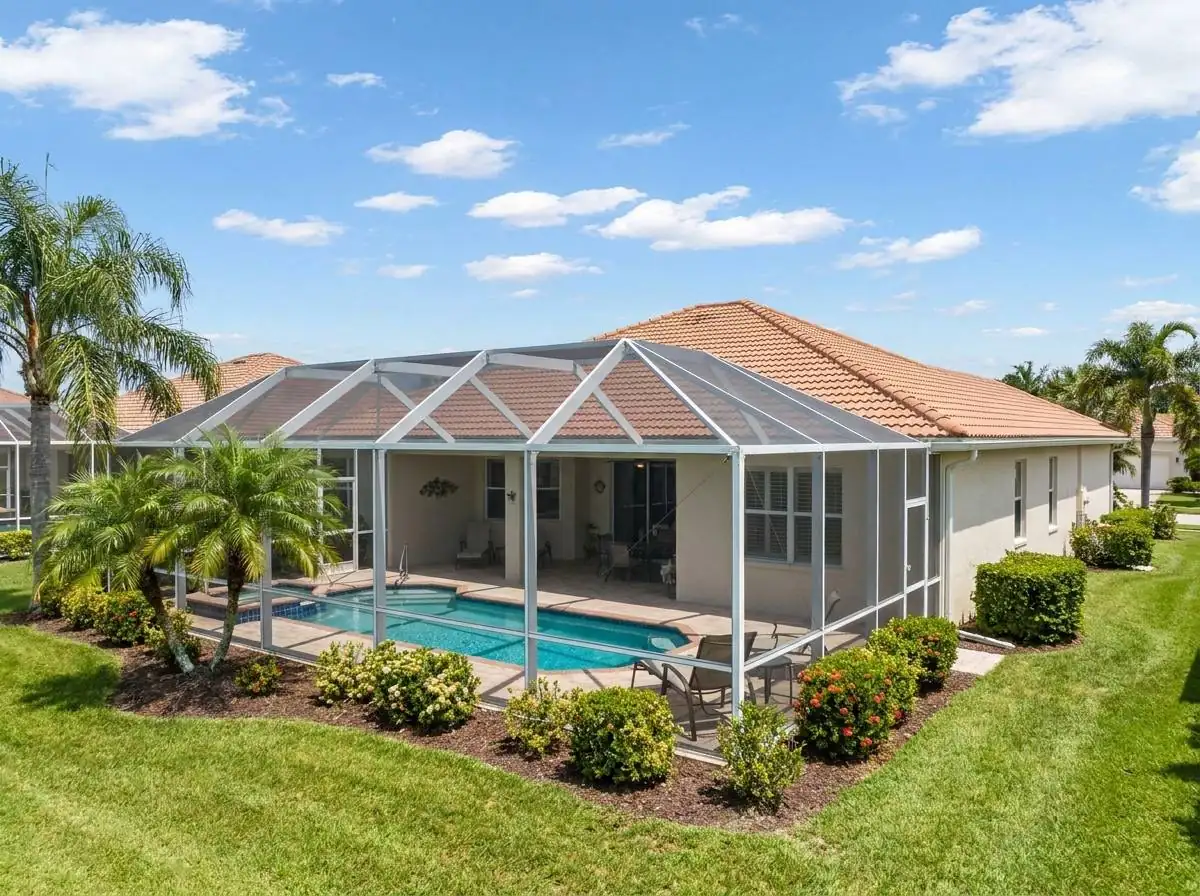
When to Repaint Your Pool Cage
Florida pool cages do not fail all at once — they give you warning signs for months before the damage gets expensive. Repaint when you notice any of these:
- Chalky, fading paint that leaves white powder on your hand when you wipe a beam.
- Rust streaks or bubbling around screws, brackets, and where beams meet.
- Peeling or flaking coating, especially on the sun-baked west and south sides.
- Rough, pitted spots you can feel through the paint — corrosion has started under the surface.
- Tea-colored stains running down from fasteners onto your screens or deck.
- The cage simply looks tired next to a freshly painted house or new screens.
The rule of thumb in South Florida: most powder-coated and painted aluminum cages need a repaint every 8 to 12 years, and sooner if you are on the coast, the Intracoastal, or a saltwater canal. Catching it at the chalking-and-streaking stage is far cheaper than waiting for structural rust. If your screens are also failing, it often makes sense to bundle a repaint with pool cage rescreening in one visit.
Not sure if it is time yet?
We will tell you straight — repaint now, or wait a season.
The Painting & Rust-Restoration Process
A repaint that lasts is 80% preparation and 20% paint. Here is the step-by-step process a quality crew follows on a South Florida pool cage:
1. Inspect & identify the rust
The crew walks the whole cage, flags every rust spot, loose fastener, and corroded beam, and decides what gets treated, what gets replaced, and what just needs cleaning.
2. Wash & degrease
The entire frame is pressure-washed and degreased to strip off chalk, mildew, salt, and dirt. Paint will not bond to a chalky or greasy surface, so this step is non-negotiable.
3. Treat & remove rust
Rusted areas are sanded or wire-wheeled down to sound metal, then treated with a rust converter or zinc-rich primer. Badly pitted or structurally weak beams are replaced before any paint goes on.
4. Mask & protect
Screens, pool, deck, pavers, and the house are masked and tarped. Overspray protection is a big part of what separates a pro job from a DIY mess.
5. Prime & spray the coating
A direct-to-metal primer goes on first, followed by an even, sprayed top coat — usually a direct-to-metal acrylic enamel built for aluminum and Florida UV. Spraying gives the smooth, factory-style finish a roller can never match.
6. Detail, cure & clean up
Doors, hardware, and fasteners are touched in, the coating is left to cure, masking comes off, and the crew hauls away every scrap. You get your backyard back clean.
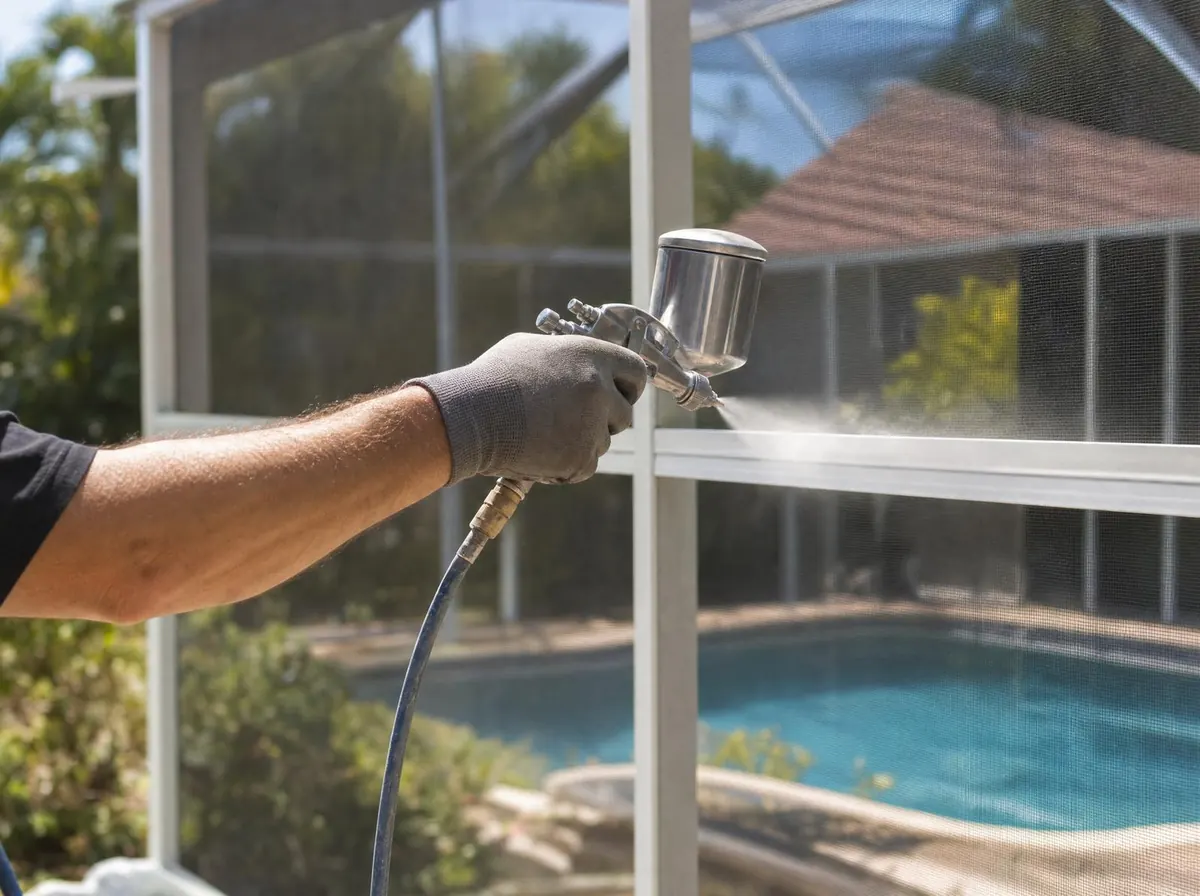
Done right, the whole job takes 2 to 4 days for an average cage. Learn more about our full pool cage painting service and how we handle rust restoration.
Why Florida Pool Cages Rust
People are often surprised that aluminum cages rust at all — aluminum itself does not rust. What corrodes and stains is everything attached to it, plus the aluminum oxidizing in our brutal climate. The culprits in South Florida:
- Steel fasteners & brackets — the screws, screen clips, and hardware are often steel, and steel rusts. Those rust streaks bleed onto the aluminum and your screens.
- Salt air & salt spray — coastal and canal-front homes get constant salt exposure that accelerates corrosion dramatically.
- Relentless UV — Florida sun chalks and breaks down the original factory coating, leaving bare metal exposed.
- Pool chemicals & humidity — chlorine, salt-chlorinated pools, and year-round moisture all attack the finish and the metal.
- Standing water in channels — super gutters and beam channels that hold water create constant corrosion points.
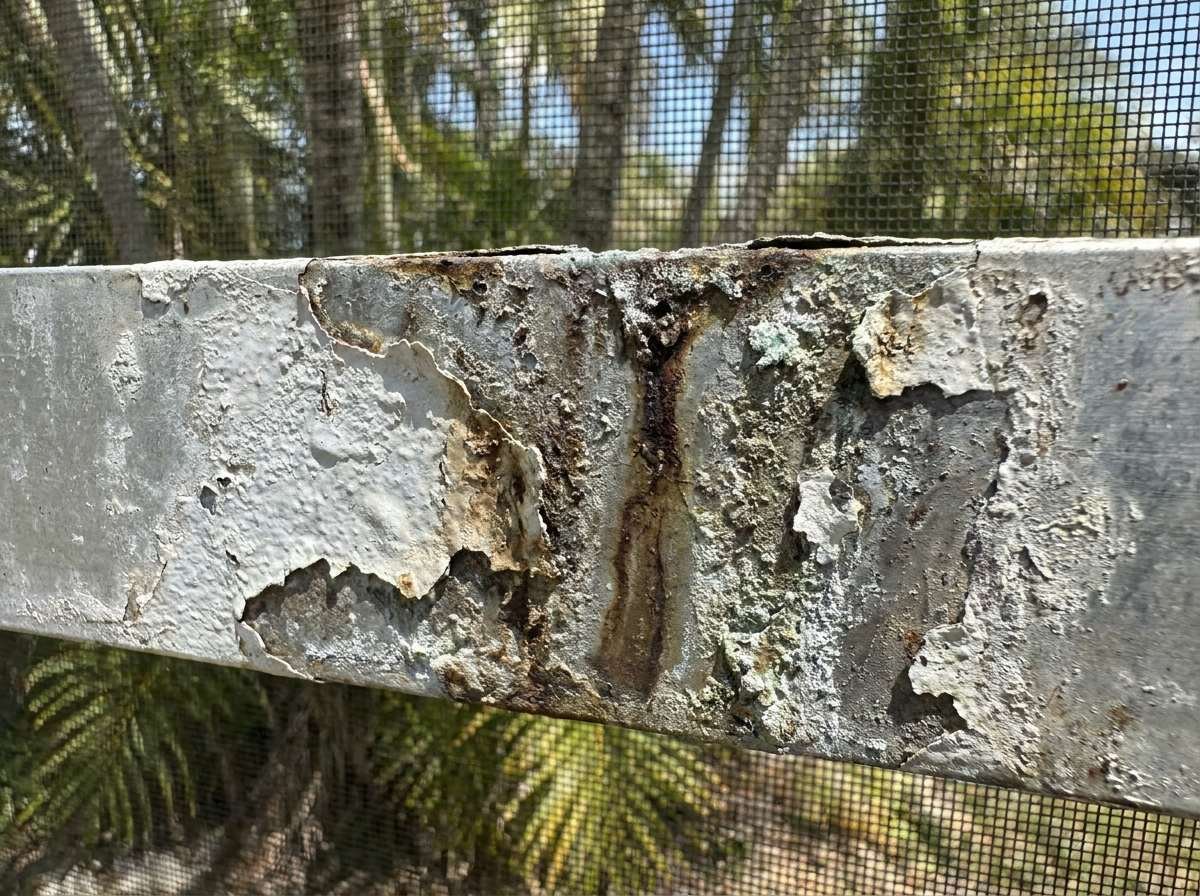
The takeaway: rust on a pool cage is a coating-and-fastener problem, and a proper repaint with rust treatment fixes it at the source — as long as you catch it before the metal is structurally compromised.
Repaint vs. Replace
Replacing a full pool cage runs $8,000 to $25,000+. Repainting and restoring one rarely tops $3,500. So the real question is whether your frame is still sound. Here is how to tell:
Repaint & restore when:
- The aluminum beams are structurally solid, even if chalky, faded, or surface-rusted.
- Rust is limited to fasteners, brackets, and surface spots.
- You want to refresh the look and add 10–15 years of protection for a fraction of replacement cost.
- The cage layout and footprint still suit your needs.
Consider replacing when:
- Beams are pitted through, soft, or have failed at connection points.
- The cage was damaged by a named storm or fallen tree (often an insurance claim).
- The structure no longer meets current wind-load code and you are doing a major remodel.
Most cages we see are repaint candidates. Aluminum framing commonly lasts 25–30+ years in Florida — it is the coating and hardware that wear out long before the metal does, which is exactly what a restoration repaint renews.
DIY vs. Pro & Choosing a Contractor
You can roll a coat of paint on a small ground-level cage yourself. Where DIY breaks down is everything that makes the finish last: proper degreasing, rust treatment, spraying for an even coat, overspray protection, and safely working 14–20 feet up on a two-story cage. A roller over chalky, rusty metal looks better for about one rainy season.
When you do hire out, these are the questions that separate a real contractor from a "today-only" pressure pitch:
- Are you licensed and insured? Ask for proof — a real company shows it without hesitation.
- How do you handle rust? The answer should include sanding to sound metal and a rust-inhibiting primer, not "we just paint over it."
- What coating do you use? Look for a direct-to-metal product rated for aluminum and Florida UV.
- Is prep and overspray protection included? Washing, masking, and cleanup should all be in writing.
- Do you offer a workmanship warranty? A confident pro stands behind the finish.
If you also have torn or sagging screens, ask whether they can handle screen repair at the same time — bundling prep, paint, and screens into one mobilization saves you money.
Frequently Asked Questions
How much does it cost to paint a pool cage in South Florida?
How long does a pool cage repaint last in Florida?
Can a rusted aluminum pool cage be saved, or does it need replacing?
What kind of paint is used on pool cages?
How long does it take to repaint a pool screen enclosure?
Make Your Pool Cage Look New Again
Free, on-site estimates across Central and South Florida — usually within 24 hours. Real rust restoration, sprayed finishes, and a crew that protects your pool and deck. Clear pricing, no high-pressure sales.