
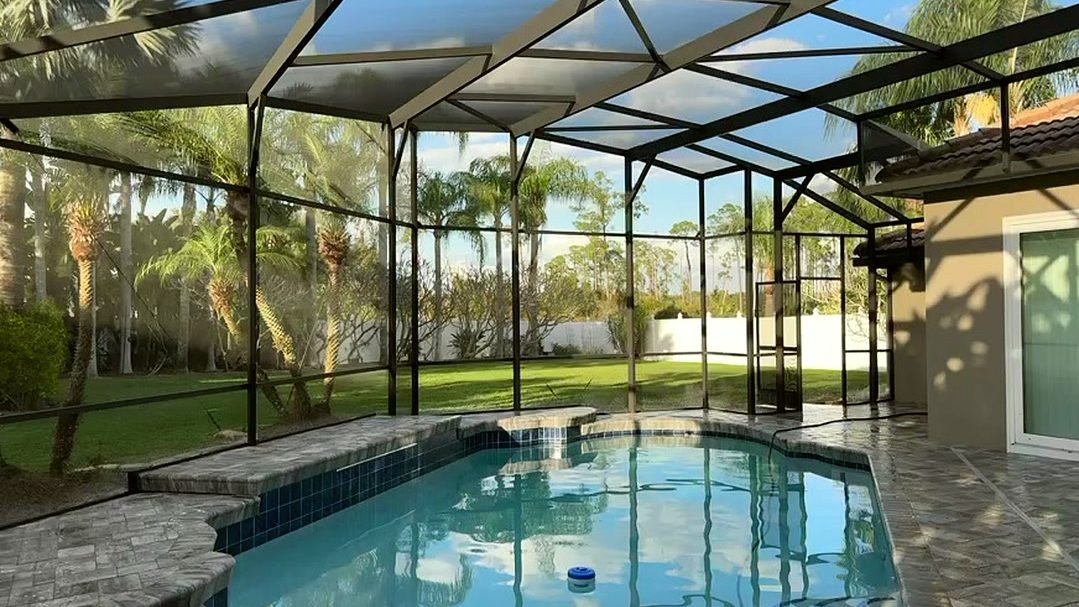
Pool cage maintenance in South Florida mostly means looking closely, on a schedule, at the parts that wear. The aluminum frame on most cages lasts decades. The mesh, the spline that holds it, the door hardware and the painted finish don't last as long. Sun, salt air and pool chemistry work on them every day. Catching a loose panel or a chalky frame early keeps the fix small.
Why a Cage Needs a Checkup
A screen enclosure can look unchanged from one week to the next. Wear builds slowly. A panel sags or spline shrinks back from a corner. The door stops closing on its own. The bronze or white finish turns dull. By the time something tears or peels, the parts around it have usually been wearing for a while too.
A walk around the cage a couple of times a year is enough for most homes. Go slowly and look at each part in the order below. Take photos of anything that looks off. They help when you ask for a quote.
Mesh and Spline
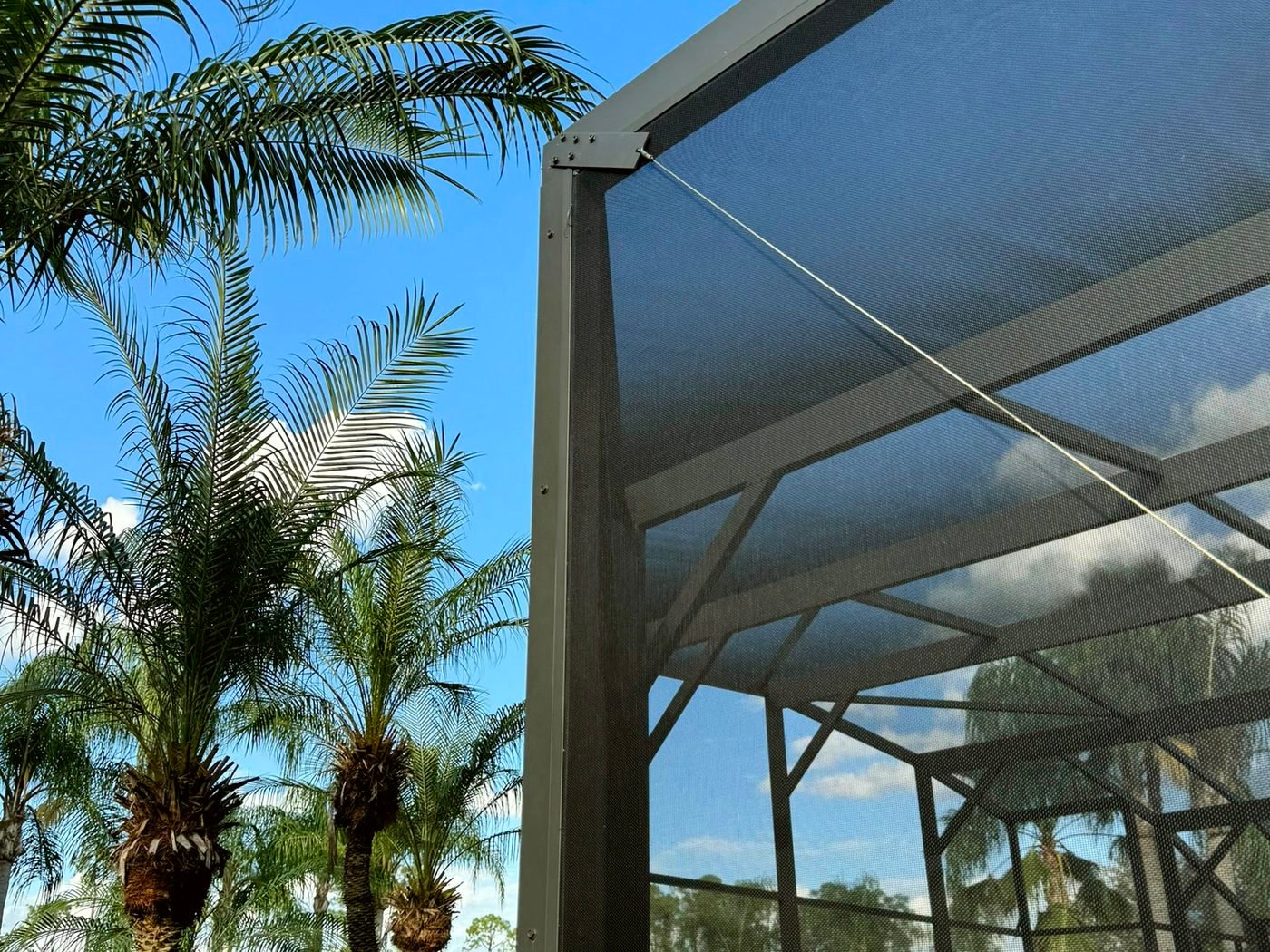
The mesh is the part that fails first. The frame almost never does. Check each panel, including the roof panels you can see from the deck.
- Tears and holes. Even a small one grows once wind gets behind it, and bugs find it fast.
- Sagging or bulging. Old mesh stretches and spline loses its grip, so the panel stops sitting flat.
- Spline pulling out. Look along the edges and corners for cord lifting out of the channel. Old spline goes brittle in the Florida sun.
- Haze or fading. Mesh that has gone cloudy or brittle across many panels is near the end of its life.
One or two damaged panels can be fixed on their own. Our pool screen repair guide explains patching versus rescreening, and these signs point to a full rescreen.
The Door
The door gets more use than any other part of the cage, so give it a closer look:
- Does it close and latch on its own, without slamming?
- Is there daylight under it when it's shut? A worn or missing sweep lets bugs in even when every panel is tight.
- Is the kickplate dented or loose?
- Does the door drag on the deck or rub the frame?
Most door problems are small repairs. The screen door repair guide walks through sweeps, kickplates and closers.
Frame Finish and Fasteners
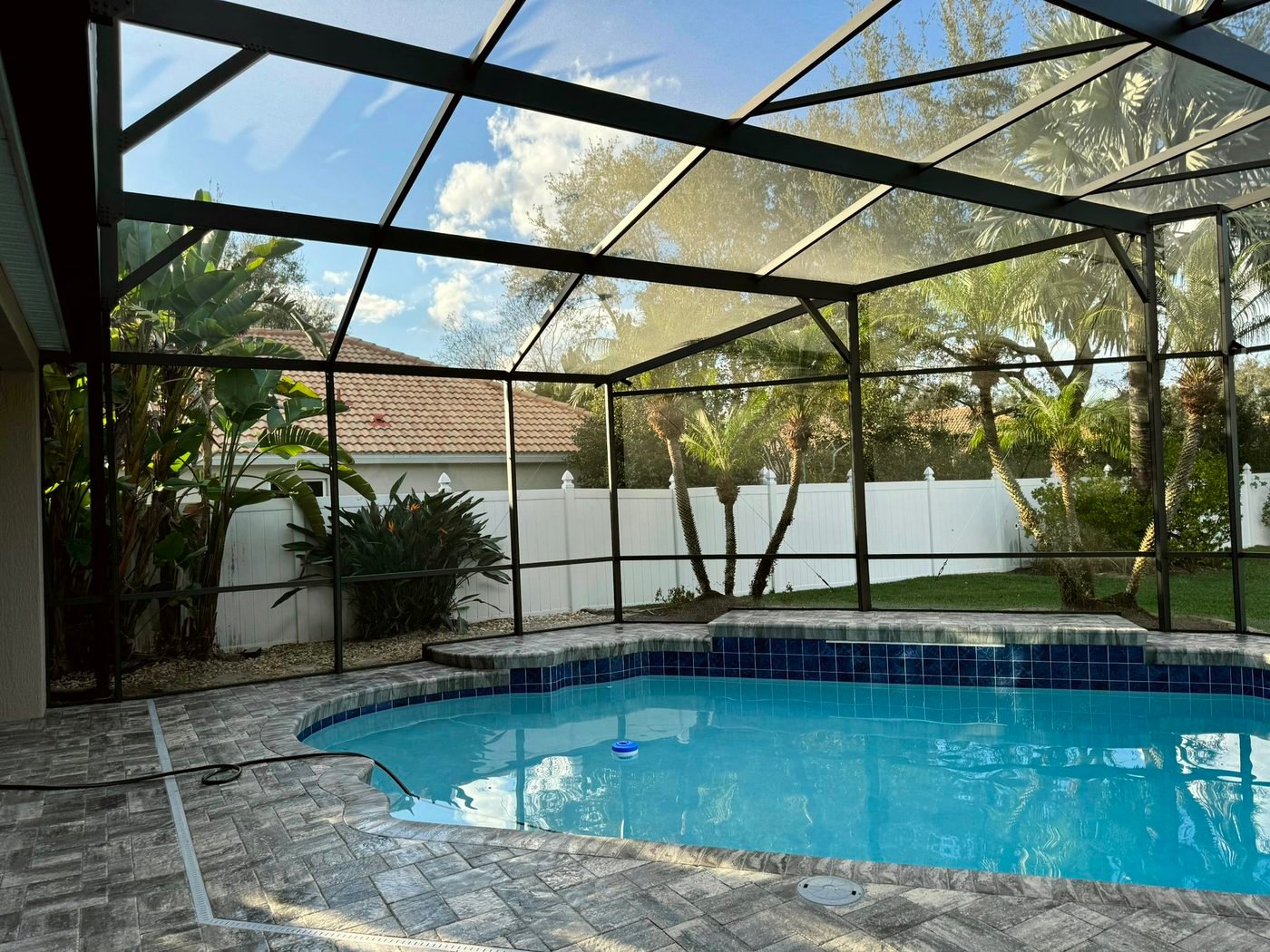
Aluminum does not rust. It oxidizes. Sun, salt air and pool chemistry slowly strip the factory finish, and the frame turns chalky and discolored. Once the finish is gone, the oxidation speeds up. Run a hand along a frame member in a sunny spot. A powdery residue on your palm means the finish is breaking down.
The screws are a different story. Steel screws can rust. Look for streaks running down from the screw heads. We treat rust at the fasteners as part of every repaint.
A frame that is chalky or peeling does not need replacing. It needs prep, a bonding primer and new finish coats. Our guide to pool cage oxidation covers what that looks like and when to paint.
Before and After Storm Season
Two of your yearly walk-arounds fit best around hurricane season. Before it starts, fix loose panels and tighten what you can, because a torn panel catches wind. After a storm, walk the cage again and look for new tears, panels blown out of their channels and anything that has shifted.
The storm season checklist goes through hurricane prep step by step. If you're already rescreening, ask about hurricane rated mesh, which uses a heavier weave and stronger yarns than standard fiberglass.
Rescreen and repaint together. If both are due, do them in one project. Removing the screens opens up every frame surface, including spots that are hard to reach with the mesh in place.
When to Call a Pro
Use what you find on your walk-around to see which work is likely needed:
| What You See | What It Usually Means |
|---|---|
| One or two torn or loose panels | Screen repair, often done in a single visit |
| Sagging, hazy or brittle mesh across much of the cage | A full or partial rescreen |
| Door that drifts, slams or leaves a gap | A door repair: sweep, kickplate or closer |
| Chalky, faded or peeling frame | Pool cage painting |
| Rust streaks at the screws | Rust treatment at the fasteners, usually during a repaint |
Not sure which it is? Send us your photos or call. We come out within 24 hours to look at the cage and give you a written quote, with no commitment.
Frequently Asked Questions
How often should I check my pool cage?
Does the aluminum frame wear out?
Can you fix a few panels without rescreening the whole cage?
What does a chalky frame mean?
Is the work warrantied?
Want a Second Pair of Eyes on Your Cage?
Book a free estimate, usually within 24 hours. The owner is on every job. We'll tell you honestly whether the cage needs a repair, a rescreen or a repaint, and if it needs nothing yet, we'll say so.